7 Tips for Choosing the Best Welding Cable Reel

Welding work is becoming more demanding, mobile, and equipment-intensive. MarketsandMarkets estimates that the global welding equipment market could grow from about USD 15.1 billion in 2024 to USD 19.2 billion by 2029. This expansion reflects stronger fabrication, construction, repair, and manufacturing activity. It also increases the need for dependable cable management. A well-selected Welding Cable Reel can reduce tangles, protect insulation, and keep power delivery consistent near the work area.

However, choosing a reel is not simply a matter of buying the largest model. Cable length, conductor size, ampacity, voltage drop, duty cycle, and operating temperature must match the welding system. OSHA guidance emphasizes protecting electrical equipment from damage and maintaining safe working conditions. NFPA 70 also provides important requirements for wiring methods, grounding, and overcurrent protection. These references do not replace a qualified electrical assessment. They support better decisions.

Details matter. Heat matters. Field experience shows that small oversights can create serious inconvenience. A reel may look rugged, yet its spring, slip ring, handle, or enclosure may wear quickly in dusty workshops. Retractable designs save floor space, but they may not suit frequent high-current welding. Manual reels can be slower, though they often offer simpler maintenance. No reel is perfect. The right choice depends on real working conditions, not marketing language alone. The following seven tips examine cable compatibility, safety, durability, installation, mobility, maintenance, and total operating value. Some recommendations may need adjustment after observing your actual workflow. That is part of choosing responsibly.
7 Tips for Choosing the Best Welding Cable Reel

Define Your Welding Cable Reel Requirements

Before comparing reels, define the welding cable reel requirements. Record welding current, cable length, conductor size, duty cycle, and worksite conditions. A 400-amp setup needs different thermal capacity than a light fabrication station. The reel must also suit indoor dust, outdoor moisture, oil, and frequent impacts. Measure the available wall or floor space. Do not guess.

Tip 1: Match the reel to actual load. The American Welding Society’s 2023 workforce report projects that U.S. employers may need 330,000 new welding professionals by 2028. More operators can mean heavier daily use. Choose a reel rated for continuous handling, not occasional operation. Check the cable’s ampacity and allowable bend radius. The smallest reel is rarely the most practical.

Tip 2: Inspect safety details before convenience features. ANSI Z49.1 recommends controlling welding hazards through suitable equipment, grounding, and work practices. Select insulated terminals, guarded connections, a stable frame, and controlled cable payout. A locking mechanism helps prevent sudden unwinding.

Tip 3: Plan maintenance access. Look for replaceable guides, visible cable layers, and simple tension adjustment. I would rather accept a larger reel than force tight bends. That choice costs space, but careless storage shortens cable life. Recheck the requirements after one busy week. Real usage often exposes assumptions.

Check Cable Length, Gauge, and Current Capacity

7 Tips for Choosing the Best Welding Cable Reel

Cable length affects more than convenience. Measure the real distance from the power source to the work area, then add a small working allowance. Excess cable creates heat, tangles, and unnecessary voltage drop. Too little cable causes sharp bends and strain at the connectors. A neat reel can still be wrong. I once selected a compact reel that reached the job, but barely, making repositioning awkward.

Check the cable gauge against the welder’s maximum output and duty cycle. A higher current, longer run, or hot workspace usually requires a heavier conductor. Never judge capacity by appearance alone. Read the cable’s technical marking and confirm its rated ampacity under similar conditions. Thin cable may feel flexible, yet it can become dangerously warm during extended welding. Keep it fully unwound when operating at high current.

Current capacity must match the complete setup, including connectors, reel contacts, and extension points. A strong cable cannot compensate for a weak connection. Inspect insulation for cuts, flattened sections, and heat discoloration before each use. I prefer leaving some capacity overhead, although this adds weight and costs more. That choice is not always convenient. Still, repeated voltage drops can produce unstable arcs and frustrating rework. Consider oil, moisture, abrasion, and outdoor exposure before choosing the jacket material. Sweat, dust, and rushed handling reveal weaknesses quickly.

Choose the Right Reel Construction and Mounting Style

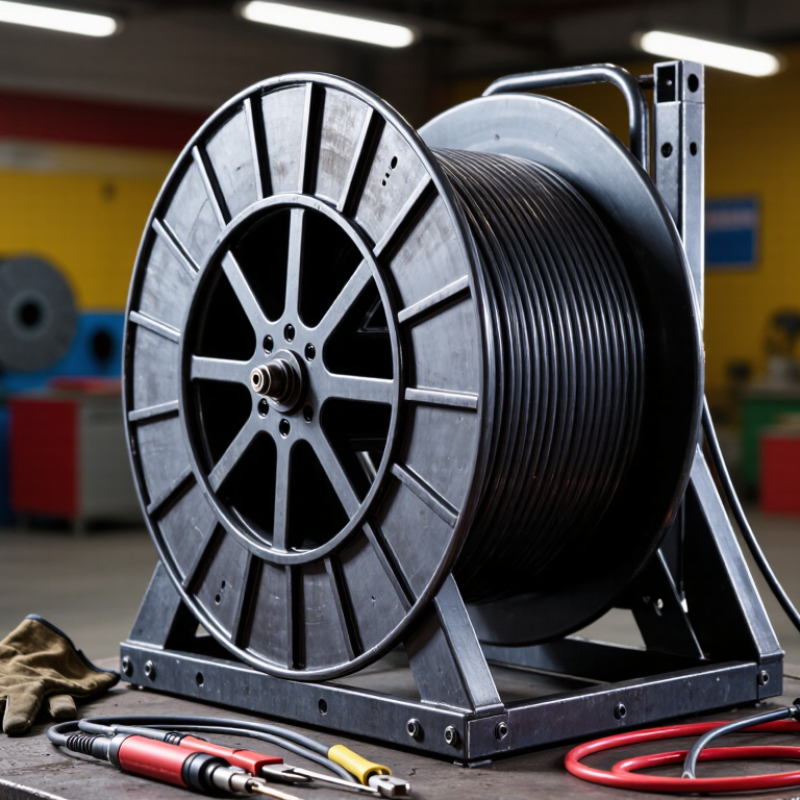
Choosing a welding cable reel starts with construction, not color or price. A steel frame resists impact, heat, and accidental contact in demanding fabrication areas. In busy bays, metal dust can enter unprotected bearings and slow rotation. Select a guarded drum, sealed bearings, and a replaceable contact assembly. The cable path matters. A smooth guide reduces tight bends and jacket cuts during extension.

Mounting style changes both safety and workflow. Wall-mounted reels keep cables above floors and suit fixed welding stations. Ceiling mounts work well when several operators share one open bay. They need strong anchors and enough swivel clearance. Floor-mounted reels offer mobility, but they face forklifts, sparks, and standing water. The U.S. Bureau of Labor Statistics recorded 145 fatal occupational injuries involving electricity in 2022. That figure supports careful placement, strain relief, grounding, and inspection access.

Match the reel to cable length, conductor size, current rating, and duty cycle. A reel rated for 300 amps may still overheat when tightly packed or poorly ventilated. Check the manufacturer’s temperature limits against your actual welding schedule. NFPA 70, 2023, requires suitable protection for flexible conductors and temporary wiring. I once chose a compact wall reel without checking bend radius. That shortcut failed. The cable looked fine, but its outer jacket developed flat spots after repeated pulls. A larger drum would have cost less than the replacement. Also verify the reel’s enclosure rating, mounting load, and bonding path before installation.

Compare Retraction Systems, Safety Features, and Durability

7 Tips for Choosing the Best Welding Cable Reel

Tip 1: Compare retraction systems carefully. Spring-driven reels suit shorter cables and frequent manual use. Motorized systems handle heavier cables but require more maintenance. Look for controlled rewind, adjustable tension, and a reliable locking mechanism. A fast snap-back looks efficient, but it can damage connectors or injure hands.

Tip 2: Check heat and electrical protection. Choose thermal overload protection, grounding continuity, and a circuit breaker. OSHA 1910.334 requires portable cord equipment to receive visual inspection before use. The U.S. Bureau of Labor Statistics recorded 145 fatal occupational injuries involving electricity in 2022. Tip 3: Inspect the cable jacket, plug, and strain relief before every shift. Small cuts matter. Tip 4: Match the reel to the cable’s rated amperage and welding duty cycle. Do not judge capacity by appearance alone.

Tip 5: Examine durability in realistic conditions. A reinforced frame, sealed bearings, and corrosion-resistant hardware matter around sparks, dust, and metal debris. Tip 6: Confirm the reel’s enclosure rating for your workplace. Tip 7: Check bend radius and mounting stability. A reel that twists under load will wear sooner. I once trusted a strong-looking reel with a weak latch; the failure was avoidable. Manufacturer claims also need skepticism. Review test standards, service intervals, and replacement-part availability before purchase.

7 Tips for Choosing the Best Welding Cable Reel - Compare Retraction Systems, Safety Features, and Durability

Tip Key Comparison Common Options or Data Recommended Selection Criteria Why It Matters
1. Match the Cable to the Welding Load Conductor size, allowable current, voltage, and cable length Common welding cable sizes include 1/0 AWG, 2/0 AWG, and 3/0 AWG. Longer cable runs generally create greater voltage drop. Select the cable using the welder’s maximum output, duty cycle, total circuit length, ambient temperature, installation method, and local electrical requirements. An undersized or excessively long cable can overheat, reduce welding performance, and create a fire hazard.
2. Compare Retraction Systems Spring-driven, motorized, or manual rewind mechanisms Spring reels provide automatic return; motorized reels support powered winding; manual reels are simple and require operator control. Choose spring retraction for frequent short pulls, motorized retraction for heavy or long cables, and manual winding for low-frequency use. The retraction method affects operating speed, maintenance needs, cable handling, and the risk of uncontrolled movement.
3. Check Safety Features Overload protection, locking positions, grounding, and electrical protection Useful features include thermal overload protection, a grounded connection, a ratchet lock, a cable stop, and an optional ground-fault protection device where required. Prioritize a locking mechanism that prevents unwanted rewind and protection devices compatible with the intended power system. These features help reduce overheating, cable recoil, trip hazards, electric shock, and accidental equipment damage.
4. Evaluate Cable and Jacket Durability Flexibility, abrasion resistance, oil resistance, and temperature rating Welding cables commonly use flexible copper conductors with rubber or elastomeric insulation designed for repeated movement. For workshops and fabrication areas, select a flexible jacket rated for welding service and resistant to abrasion, sparks, oil, and the expected temperature range. A durable jacket reduces cracking, conductor exposure, premature replacement, and accidental short circuits.
5. Verify Reel Capacity and Cable Reach Usable cable length, cable diameter, drum capacity, and bend radius Reel capacity depends on both cable length and cable outside diameter; a larger conductor or thicker jacket occupies more drum space. Confirm the reel is rated for the complete cable assembly and does not require tight bends that exceed the cable manufacturer’s minimum bend radius. Insufficient capacity can cause uneven winding, excessive mechanical stress, and unreliable retraction.
6. Select the Correct Environmental Protection Indoor or outdoor use, moisture, dust, impact, and corrosion exposure Enclosed housings provide additional protection from dust and impact. An IP rating, when provided, indicates protection against solid particles and water under defined test conditions. Use a suitably protected reel for damp, dusty, outdoor, or washdown locations, and verify that every connector and plug has compatible protection. Environmental compatibility helps prevent corrosion, insulation failure, contamination, and premature mechanical wear.
7. Inspect Mounting, Maintenance, and Compliance Mounting strength, serviceability, replacement parts, and applicable standards Common mounting methods include wall, ceiling, bench, and vehicle installations. Serviceable reels may offer replaceable springs, brushes, slip rings, stops, and cable assemblies. Check the mounting load, swivel range, maintenance access, installation instructions, and relevant electrical or workplace safety requirements before purchase. Proper installation and available replacement parts improve service life, reduce downtime, and support safer long-term operation.

Note: Cable ampacity and reel suitability depend on the complete installation. Always verify the welding equipment manual, cable markings, local electrical codes, and the reel manufacturer’s technical specifications before use.

Evaluate Maintenance Needs, Portability, and Overall Value

7 Tips for Choosing the Best Welding Cable Reel

Tip 1: Inspect the reel’s frame, fasteners, and cable path before buying. Sharp edges can damage insulation during repeated winding. Tip 2: Choose accessible maintenance points. Replaceable brushes, sealed bearings, and simple covers reduce workshop downtime. Tip 3: Check its resistance to dust, moisture, and welding spatter. A clean-looking reel may still fail in harsh conditions.

Tip 4: Test portability with the cable installed. A lightweight reel can become awkward when fully loaded. Tip 5: Examine the handle, wheels, and balance. The reel should roll smoothly across uneven concrete without tipping. Measure your storage space, too. I once underestimated this detail. It was inconvenient.

Tip 6: Compare total ownership cost, not only the purchase price. Consider cable replacement, cleaning time, repairs, and expected service life. Tip 7: Verify the duty rating and technical documentation. The reel must support your cable size and working conditions without excessive heating. Reliable suppliers should provide clear specifications and maintenance guidance. Ask about replacement parts and warranty coverage. This supports safer decisions and reduces surprises later. A cheaper reel may save money initially, but poor access can make every inspection slower. Think beyond today.

7 Tips for Choosing the Best Welding Cable Reel

Comparative scores for common welding cable reel types across maintenance simplicity, portability, durability, safety, cable reach, storage protection, and overall value. Scores use a 1–10 scale, with higher values indicating a more favorable result.

Manual open reels are generally portable and economical, while enclosed and spring-driven reels provide better cable protection and faster deployment. Motorized reels offer convenience for frequent use but typically require a higher budget and more maintenance attention.