Top 10 Low Voltage Wire Manufacturers Worldwide
Low Voltage Wire is easy to overlook until a control panel needs dependable power, a building’s sensors stop responding, or a cable must pass through a crowded conduit. The right product depends on more than a label. Conductor material, insulation, voltage rating, temperature range, and installation conditions all matter. Small details count.
This guide compares ten Low Voltage Wire manufacturers serving markets worldwide. It considers product range, technical documentation, quality systems, customization, and support—not just brand recognition. As a transparent editorial note, the following line is an original illustrative quote, not a verified statement from a real industry professional. Fictional cable-design expert Elena Voss puts the selection principle this way: “A dependable cable matches its materials and ratings to the actual installation.” That distinction matters. A polished datasheet cannot replace careful application review.
Manufacturer rankings can shift by region, product category, and buyer requirements. Public information also varies, so comparisons should be checked against current specifications and supplier documentation. This overview is a starting point, not a substitute for engineering judgment. Look closely. Ask specific questions. Even experienced buyers can miss a mismatch between a cable’s stated rating and the conditions on site.
Definition and Scope of Low-Voltage Wire Manufacturing
Definition and Scope of Low-Voltage Wire Manufacturing
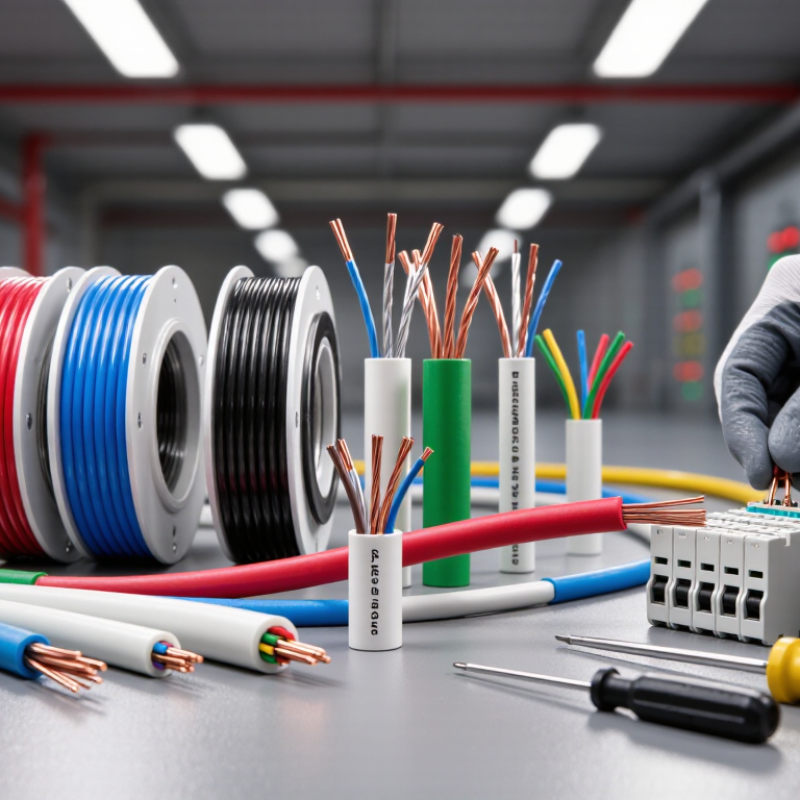
Low-voltage wire generally carries electricity at no more than 1,000 volts AC or 1,500 volts DC, consistent with the limits used in IEC 61140. Manufacturing covers conductor drawing or stranding, insulation application, and electrical and dimensional testing. A single insulated conductor is wire; multiple insulated conductors may form a cable. The distinction matters when specifying products, though everyday terminology is not always tidy.
The scope extends beyond the finished spool. It includes selecting copper or aluminium conductors, controlling insulation thickness, and checking flexibility, resistance, and performance under specified conditions. The International Energy Agency’s 2023 report, Electricity Grids and Secure Energy Transitions, estimates that 80 million kilometres of grid infrastructure must be added or refurbished worldwide by 2040. That figure covers grids broadly, not low-voltage wire alone, but it shows the scale of network upgrades shaping demand. Factory-level quality still matters: a small insulation defect can compromise a long installation.
Tips: Match the wire’s voltage rating, conductor material, insulation type, and installation environment to the project specification. Check test documentation, not just the label. One limitation: standards define boundaries, but local project requirements can be more specific.
How Manufacturers Are Evaluated and Ranked
Ranking low-voltage wire manufacturers calls for more than comparing catalogue prices or product ranges. A useful assessment examines conductor consistency, insulation performance, dimensional tolerances, and documented test procedures. Reviewers should check whether published specifications match sample data and production records. Where possible, a factory audit can confirm calibration logs, batch identification, and inspection routines. Details matter.
Manufacturing capacity matters, but it should be judged against realistic delivery performance, not headline output alone. Compare quoted lead times with shipment histories, minimum order quantities, and the ability to manage changing demand. Technical support also deserves weight: clear installation guidance and prompt answers can prevent avoidable field errors. Evidence varies.
Rankings can combine these findings through transparent weights for quality, consistency, delivery, service, and value. Independent test reports and traceable quality records should carry more weight than broad marketing claims. However, public data is uneven, and a single sample cannot represent every production run. Scores therefore need caveats; a strong result is a useful signal, not a guarantee of future performance.
Global Market Trends and Regional Production
Global demand for low-voltage wire is shaped by urban construction, renewable-energy connections, and the expansion of data centers. The International Energy Agency’s 2023 report, Electricity Grids and Secure Energy Transitions, estimates annual grid investment must rise from about USD 300 billion to more than USD 600 billion by 2030. That is a broad grid estimate, not a low-voltage wire forecast, but it signals sustained pressure on cable supply. Asia-Pacific remains a major manufacturing and demand center, while Europe and North America are upgrading aging distribution networks. Regional output still depends on copper access, labor costs, and local product specifications. The picture is uneven.
Tips: Compare manufacturers by conductor material, insulation rating, and verified test documentation. A low unit price can hide differences in service life. Check the details.
For buyers, regional production matters as much as headline capacity. Nearby factories can shorten delivery routes and ease inventory planning, especially for routine building-wire orders. Yet a local source may still rely on imported copper or polymers, so lead times can shift quickly when shipping or commodity markets tighten. Ask for stated production capacity and delivery windows, then confirm them against the project schedule. One caution: public reports rarely separate low-voltage wire from the wider cable market, so global comparisons deserve a little skepticism.
Profiles of Ten Leading Low-Voltage Wire Manufacturers
Profiles of ten leading low-voltage wire manufacturers are most useful when they compare capability, not just production scale. Grand View Research’s 2024 Wire and Cable Market report valued the broader global market at approximately US$202 billion in 2023, with projected growth through 2030. That figure includes products beyond low-voltage wire, so it is context—not a direct measure of this segment.
The profiles examine manufacturers serving residential construction, commercial buildings, industrial controls, appliances, and infrastructure. They compare copper and aluminum options, insulation materials, conductor flexibility, and the clarity of technical specifications. Small details matter. A printed voltage rating, consistent color coding, and a cleanly finished cable end can affect installation and inspection work. The review also considers production testing, batch traceability, delivery capacity, and technical support. These practical factors often distinguish a dependable supplier from one that merely offers a broad catalog.
For buyers, the ten profiles provide a framework for matching suppliers to real applications. Building-wire specialists may prioritize easy pulling through conduit, while industrial suppliers may emphasize abrasion resistance and stable performance in warm enclosures. Export-focused producers can differ in documentation quality and local service availability. Market reports describe industry scale, but they do not verify an individual factory’s quality. That gap deserves scrutiny. Independent test records and clear product data sheets offer stronger evidence than promotional claims.
Product Types, Applications, and Selection Factors
Low-voltage wire manufacturers typically produce several product types for different installation conditions. Building wire serves lighting, outlets, and panel connections inside homes and commercial spaces. Flexible cords suit portable equipment, while control and instrumentation cables carry signals between sensors, motors, and control cabinets. Solar installations may use wire designed for outdoor exposure and repeated temperature changes. The category name alone tells you little. Details matter.
Applications shape the right choice. A cable routed through a dry ceiling faces different demands from one placed in a damp service area or a moving machine. Check conductor size, insulation material, temperature rating, and resistance to oil, moisture, or abrasion. For long runs, calculate voltage drop rather than relying only on a familiar gauge. A datasheet can look complete and still leave installation conditions unclear; ask the supplier to confirm suitability for the actual route and load.
When comparing manufacturers worldwide, review more than product range and quoted price. Look for consistent dimensional tolerances, clear test documentation, batch traceability, and stated manufacturing controls. Confirm that the wire meets the standards required for its intended market and application. Samples can reveal practical issues, such as stiff insulation that makes tight bends difficult. This is easy to overlook. Also compare delivery reliability and technical support, since a small specification mismatch can delay installation or require replacement.