Who Are the Top Automotive Wire Manufacturers in China?

China’s automotive cable sector includes manufacturers serving vehicle assemblers, harness makers, and export markets. This guide explores who the leading suppliers are and what distinguishes their capabilities. Automotive Wire is more than a line in a catalog: conductor material, insulation, temperature rating, and consistent dimensions all affect performance inside a vehicle.

A supplier’s name alone cannot establish quality. Buyers should compare product specifications, sample results, production capacity, quality-management evidence, and traceability records. Ask how the company verifies conductor resistance, insulation thickness, and performance after exposure to heat or abrasion. Small details matter. A polished catalog is not proof. Independent test reports and clear answers provide stronger evidence, though even those deserve careful review.

The companies discussed in this overview should be assessed against the needs of each application, rather than treated as a universal ranking. Some projects require specialized high-temperature wire; others prioritize stable supply, customization, or support for harness production. Confirm certifications and technical claims directly with manufacturers, since product ranges and approvals can change. This comparison offers a starting point, not a substitute for audits or engineering validation. Choosing a supplier takes more than a quick search.
Who Are the Top Automotive Wire Manufacturers in China?

Automotive Wire Explained: Conductor, Insulation, and Harness Boundaries

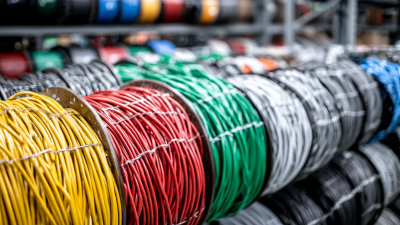
Automotive wire is a component, not a complete wiring system. Its conductor carries electrical current, while insulation surrounds the conductor and helps protect it from heat, abrasion, fluids, and short circuits. In Chinese manufacturing, specifications can vary by application, so a product description alone is not enough. Check conductor material, cross-section, insulation type, and temperature rating against the vehicle’s requirements.

A copper conductor may use solid or stranded construction; fine strands bend more easily around tight routes behind a dashboard. Insulation thickness and material affect flexibility and resistance to engine-bay heat. Small differences matter. A wire suitable for a cabin sensor may not withstand the heat near an engine. Ask for test data and sample measurements, and confirm that stated values match the delivered product.

A harness is different: it combines wires with terminals, connectors, protective sleeves, and routing features into an organized assembly. The wire manufacturer may supply conductors or insulated wire, while another supplier builds the harness. These roles sometimes overlap, and sales language can blur the boundary. It is worth asking exactly what is included: cut wire, terminated leads, or a tested assembly. I would not judge a supplier by a polished catalog alone; inspecting samples and reviewing process records gives a more grounded picture.

China Produced 30.16 Million Vehicles in 2023, CAAM Reports

China produced 30.16 million vehicles in 2023, according to figures reported by the China Association of Automobile Manufacturers. That scale matters to automotive wire suppliers. Each vehicle depends on electrical connections for power, control, lighting, and communication. Production volume alone, however, does not reveal how much wire any one factory needs.

The practical demand varies with vehicle design. A compact car and a battery-powered vehicle can require different cable layouts, insulation, and testing. On a factory floor, technicians may check harness lengths, connector fit, and resistance before installation. Small defects can create delays. Reliability is not optional.

There is more to assess. Buyers often examine consistency between production batches, traceability of materials, delivery capacity, and support for custom specifications. A supplier’s equipment and quality records can provide useful evidence, but a brief sales claim is not enough. The 2023 total signals a large manufacturing base; it does not prove that every supplier can meet the same standards. That distinction is easy to overlook.

Major Chinese Cable Suppliers: Baosheng, Far East, Shangshang, and Wanma

Baosheng, Far East, Shangshang, and Wanma are established Chinese cable suppliers worth examining for automotive wire sourcing. Their names alone do not establish suitability. Buyers should compare conductor material, insulation type, temperature range, voltage rating, and performance after heat and abrasion testing.

Small details matter: a cable routed beside a hot engine component faces different demands from one used inside a door. Request current product specifications and test records for the exact part number.

Market figures show why capacity and product range matter. The China Association of Automobile Manufacturers reported 31.282 million vehicles produced in China in 2024. The International Energy Agency’s Global EV Outlook 2025 says electric car sales in China exceeded 11 million that year.

These figures describe vehicle demand, not cable quality or supplier market share. That distinction is easy to miss. Public data rarely allows buyers to compare these four manufacturers on a like-for-like basis.

A practical assessment should also check batch traceability, delivery consistency, and change-control procedures, then validate samples under the vehicle’s actual operating conditions.

How to Compare Suppliers: IATF 16949, Voltage Ratings, and Test Standards

Chinese automotive wire suppliers should be compared by production controls, not catalogue size. Check whether an IATF 16949 certificate is valid and covers the actual manufacturing site and product scope. A certificate is a start. Ask how the supplier controls conductor stranding, insulation thickness, and lot changes. Request recent audit findings or corrective-action examples, with sensitive details removed. These show whether procedures work on the factory floor.

Match voltage ratings to the vehicle circuit and operating conditions. Confirm conductor size, insulation material, temperature range, and rated voltage on the datasheet. Then compare test reports against the specification required for your application. Relevant checks may include insulation resistance, withstand voltage, heat aging, abrasion, and flame behavior. Verify sample identification, test dates, and acceptance limits. A neat report alone proves little if it cannot be traced to the wire you will receive. I would still inspect production samples; documents can miss a process change.

Tips: Send every supplier the same drawing and test checklist. Ask for a sample reel, not only short cut pieces. Compare measurements across several locations, and record any difference before approval. Small gaps matter. No checklist removes every risk, but a clear review makes supplier comparisons more reliable.

Who Are the Top Automotive Wire Manufacturers in China? - How to Compare Suppliers: IATF 16949, Voltage Ratings, and Test Standards

Use this evidence-based checklist to compare suppliers. It does not rank or certify individual manufacturers; confirm all certificates and product claims for the specific production site and cable construction.

Comparison Dimension What to Check Evidence to Request How to Compare Suppliers
Automotive quality management Whether the manufacturing site holds a current IATF 16949 certificate and whether its certified scope covers the relevant cable manufacturing activities. Certificate showing the site address, scope, certification body, and validity; verify the certificate through the applicable IATF-recognized verification channel. Compare the exact production site and scope—not just a corporate-level claim. A certificate does not by itself establish that a specific cable meets your product requirements.
Voltage class Confirm the cable’s stated voltage class and suitability for the vehicle circuit. Automotive cable specifications commonly distinguish 60 V and 600 V classes; high-voltage traction applications require the applicable vehicle and product specification. Product datasheet identifying rated voltage, intended application, conductor size, insulation system, and applicable standard or customer specification. Compare products with the same voltage class and construction. Do not treat a higher voltage label as proof of suitability for a particular high-voltage vehicle system.
Product and test standards Identify the exact edition and part of the applicable automotive cable standard, such as the ISO 19642 series, or the required national or customer specification. Standard-by-standard compliance matrix, test reports, sample identification, test date, laboratory details, and the cable construction tested. Check that reports cover the ordered product and relevant requirements. A general statement such as “tested to ISO” is not a substitute for a traceable report.
Electrical performance Review applicable limits for conductor resistance, insulation resistance, and voltage withstand, as specified by the chosen cable standard or customer drawing. Test results with conductor size, temperature or conditioning where relevant, test method, acceptance limit, and pass/fail outcome. Compare results against the same specification and test conditions; values from different conductor sizes or methods are not directly comparable.
Mechanical and environmental durability Check the tests required for the application, which may include abrasion, scrape or wear resistance, flexibility, heat aging, low-temperature performance, and fluid exposure. Reports identifying the test method, specimen construction, conditioning, acceptance criteria, and results for each required test. Compare test coverage with the vehicle program’s actual operating environment. Do not assume every cable is tested for every listed condition.
Material and construction control Confirm conductor material and stranding, insulation material, nominal dimensions, color, and any shielding or other construction requirements. Controlled product specification, material declarations where required, dimensional inspection records, and change-control procedure. Match the offered construction to the drawing and approved specification. Review how the supplier notifies customers of material or process changes.
Production consistency and traceability Assess inspection plans, process controls, lot identification, nonconformance handling, and the ability to trace finished cable to production records. Quality plan or control plan, sample inspection records, lot-label example, traceability procedure, and corrective-action process. Compare the completeness and traceability of records, and confirm that the proposed controls apply to the production line intended for your order.
Sample approval and change management Determine how samples are evaluated and how design, material, tooling, or manufacturing changes are reviewed and approved. Sample submission package, agreed approval workflow, revision-control process, and written change-notification requirements. Prefer a documented process that links approved samples and revisions to production lots and requires customer review where the supply agreement calls for it.

China’s 2023 NEV Output Reached 9.59 Million Units, CAAM Reports

Who Are the Top Automotive Wire Manufacturers in China?

China’s 2023 NEV Output Reached 9.59 Million Units, CAAM Reports

China produced 9.587 million new energy vehicles in 2023, up 35.8% year over year, according to the China Association of Automobile Manufacturers (CAAM). Sales reached 9.495 million units, or 31.6% of new vehicle sales. These figures show how quickly electrified vehicles have moved into mainstream production.

A larger NEV fleet means more demand for high-voltage cables, insulated conductors, and carefully routed wiring harnesses. These parts must handle heat, vibration, and electrical loads in compact spaces. For wire manufacturers, the production surge makes reliable material supply and consistent quality control especially important. Small defects matter.

The International Energy Agency’s Global EV Outlook 2024 reports that China accounted for nearly 60% of global electric car sales in 2023. That international context helps explain why Chinese wire suppliers are attracting attention. Yet vehicle output alone cannot identify the strongest manufacturers. Production capacity, testing methods, and delivery consistency also matter. Output is only part of the picture. And supplier data can be difficult to compare across companies, so rankings deserve careful scrutiny.