Choosing the right Wire Drawing Machine can influence production speed, wire quality, energy use, and long-term maintenance costs. In 2026, manufacturers compete through smarter controls, improved die cooling, stronger capstans, and more flexible line configurations. Yet impressive specifications do not always guarantee reliable factory performance.
This guide examines ten leading Wire Drawing Machine manufacturers using practical evaluation criteria. We consider engineering experience, product range, automation capability, material compatibility, service coverage, and customer feedback. Attention also goes to details operators notice daily, including vibration, noise, wire tension, lubrication control, and changeover time. These factors can determine whether a machine performs smoothly during an extended production shift.
The selection is not a universal ranking. A copper wire producer may need different equipment from a high-carbon steel manufacturer. Some companies excel in customized lines, while others offer stronger standard systems and faster delivery. Information can also change as manufacturers update models, factories, and regional support networks. That deserves caution.
We have combined technical research with realistic production concerns. The discussion highlights measurable strengths, potential limitations, and questions buyers should ask before signing a contract. It also considers training, spare-part availability, commissioning support, and total ownership cost. A lower purchase price may hide expensive downtime later.
Not every claim is equally easy to verify. That is worth remembering. Readers should confirm specifications directly with suppliers and request recent references from comparable plants. With that balanced approach, this overview aims to make the 2026 manufacturer landscape clearer, more practical, and easier to evaluate.
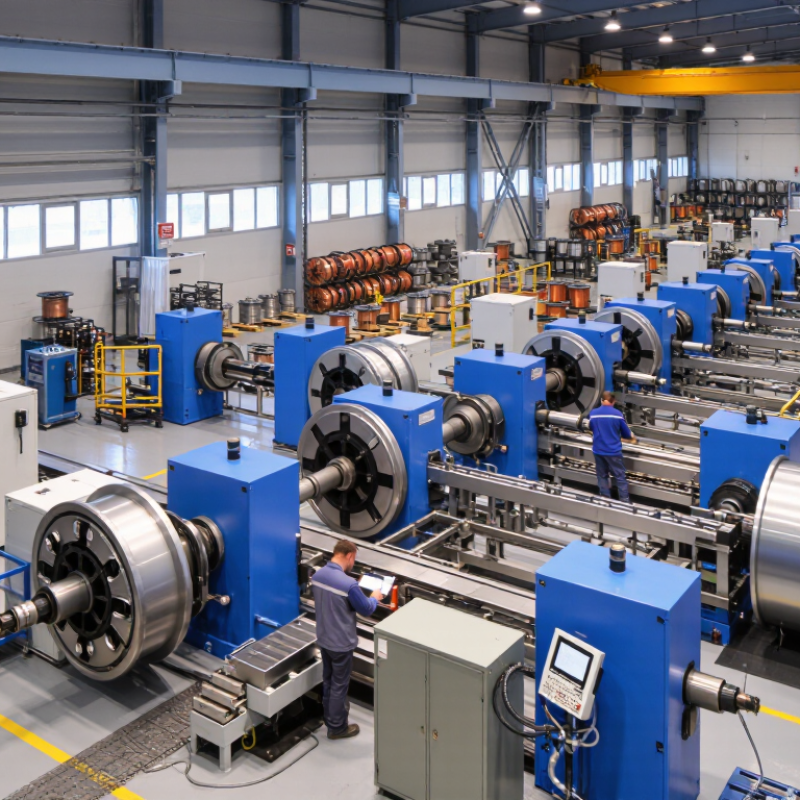
What Is a Wire Drawing Machine and How Does It Work?
A wire drawing machine reduces metal wire through one or more dies. Each die has a smaller opening than the previous one. The machine pulls the wire, rather than pushing it, while controlled tension shapes its diameter. Lubrication lowers friction and limits heat. The result is a smoother, stronger, and more precise wire.
The process begins with a prepared rod, often steel, copper, or aluminum. Operators remove surface scale before feeding it through the die box. A capstan then pulls the wire at a carefully selected speed. Several passes may be required. Between passes, the wire can become harder and less flexible. Annealing may restore ductility, but excessive heat can damage the surface.
Small errors matter. A worn die can produce uneven diameter, scratches, or unstable tension. In practical production, sensors monitor speed, load, temperature, and take-up alignment. According to the World Steel Association, global crude steel production reached about 1.88 billion tonnes in 2024, showing the scale of the material supply behind wire manufacturing. The U.S. Department of Energy also estimates that motor-driven systems consume roughly 70% of industrial electricity in the United States. Efficient drives and correct lubrication therefore affect both quality and operating cost. These figures do not guarantee efficiency. Real results depend on die design, maintenance, material grade, and operator judgment.
Cross-sectional area decreases as wire passes through successive dies. This representative six-pass schedule uses a 20% area reduction per pass, a practical engineering example for explaining the drawing process without comparing individual brands.
In a wire drawing machine, a powered capstan pulls the wire through a hardened die. The die reduces the wire’s cross-sectional area, while the capstan controls tension and speed. With a constant 20% reduction per pass, the remaining area follows the sequence 100%, 80%, 64%, 51.2%, 41.0%, 32.8%, and 26.2%.
Evaluating wire drawing machine manufacturers requires more than comparing catalog prices. Examine their experience with your wire material, diameter range, tensile requirements, and production speed. Ask for documented case studies, factory photographs, and measurable results from similar installations. A reliable manufacturer should explain die design, capstan configuration, lubrication control, and cooling performance in practical terms.
Measure the basics. Request a live test using your own sample wire. Check diameter consistency at several points, surface finish under magnification, motor temperature, noise levels, and energy consumption. A useful trial should include startup, continuous operation, speed changes, and emergency stopping. Pay attention to the control interface. If operators need constant assistance, the machine may create hidden costs.
Inspect the manufacturer’s quality process, spare-parts availability, training plan, and response time for technical support. Ask whether key components are traceable and whether maintenance records are provided. Clear inspection reports show professional discipline. Vague promises do not. Pricing still matters, but the cheapest offer can become expensive after repeated die changes or unstable output. I would also question impressive claims that lack production data. No evaluation is perfect; small sample tests can miss long-term wear. A stronger decision combines factory evidence, operator feedback, performance testing, and realistic ownership costs.
The Top 10 Wire Drawing Machine Manufacturers in 2026 should be judged by measurable performance, not advertising claims. A reliable evaluation examines drawing speed, tensile control, energy use, die alignment, and maintenance access. Machines should produce consistent wire across long production runs. Small deviations can create costly surface marks.
The strongest manufacturers usually offer equipment for steel, copper, aluminum, and specialty alloys. Their systems may include multi-pass drawing blocks, automatic lubrication, digital tension monitoring, and real-time fault alerts. Operators also need clear controls and safe access around rotating parts. Practical training matters. A technically advanced machine can still underperform when instructions are unclear or service response is slow.
This ranking should consider factory experience, engineering depth, verified installations, and independent customer feedback. It should also review spare-part availability and documented testing procedures. Published specifications are useful, but they are not enough. Actual output depends on material quality, die condition, cooling, and operator skill. That is where rankings become imperfect. A machine that excels in high-speed steel production may not suit delicate copper wire. Buyers should compare warranty terms, installation support, and total operating cost before choosing among the ten leading manufacturers.
The top ten wire drawing machine manufacturers in 2026 compete through different technical strengths. Some specialize in dry drawing lines for steel wire, while others focus on wet systems for copper, aluminum, and fine conductors. Their product ranges may include single-block machines, multi-pass lines, inline annealing units, take-up systems, and laser-based diameter controls. Speed matters, but stable tension often matters more.
Manufacturers with strong engineering teams now use servo drives, closed-loop cooling, automatic die lubrication, and remote condition monitoring. These features can reduce surface marks and unplanned downtime. However, published production speeds require careful review. A figure achieved with soft copper cannot represent hardened steel. The wire diameter, alloy, die design, and reduction schedule change everything. This is where buyer experience remains valuable.
Global market strength also depends on service depth. European suppliers often emphasize customized process design and long machine life. East Asian producers frequently offer competitive pricing, fast production, and broad export capacity. North American specialists may stand out in technical support and retrofit work. The strongest candidates usually provide factory trials, spare-parts planning, operator training, and documented acceptance tests. Look for measurable evidence, not polished brochures. A five-year maintenance record can reveal more than a headline speed. Some comparisons remain imperfect because manufacturers report performance differently. That weakness deserves attention before ranking the final ten.
Comparative industry overview using anonymized manufacturer profiles; company and brand names are intentionally omitted.
| Rank | Anonymized Manufacturer | Primary Market Position | Core Drawing Technology | Typical Machine Portfolio | Automation & Controls | Materials Commonly Processed | Typical Output Range | Global Market Strength | Best-Fit Applications |
|---|---|---|---|---|---|---|---|---|---|
| 1 | Manufacturer Profile 01 | Large-scale integrated line supplier | Multi-die wet drawing with inline surface treatment | Rod breakdown, intermediate drawing, fine-wire and take-up systems | PLC, HMI, recipe management, closed-loop tension control | Copper, aluminium, low-carbon steel and stainless steel | Fine to medium wire; line speed depends on material and diameter | Very strong | Power cable, magnet wire and industrial conductor production |
| 2 | Manufacturer Profile 02 | High-performance non-ferrous specialist | Slip and slipless multi-wire drawing with emulsion cooling | Copper rod breakdown, bunching-compatible drawing and precision take-up | Servo drives, digital speed synchronization and fault diagnostics | Copper, copper alloys and aluminium | Medium to ultra-fine non-ferrous wire | Very strong | Automotive cable, data cable and electrical conductor manufacturing |
| 3 | Manufacturer Profile 03 | Premium ferrous wire equipment supplier | Dry block drawing with carbide or diamond die systems | Rod breakdown, straight-line drawing, spoolers and pay-offs | Digital line control, load monitoring and automated recipe recall | Low-carbon steel, high-carbon steel and stainless steel | Medium and heavy-gauge industrial wire | Strong | Spring wire, tire cord, rope wire and welding wire |
| 4 | Manufacturer Profile 04 | Flexible custom-engineered line builder | Modular wet and dry drawing configurations | Single-wire, multi-wire, fine-wire and compact laboratory systems | PLC/HMI control, remote service access and production data logging | Copper, aluminium, steel and selected alloys | Small-batch, pilot and medium-volume production | Strong | Specialty wire, research facilities and diverse product portfolios |
| 5 | Manufacturer Profile 05 | Cost-efficient high-volume producer | Multi-cone and inline drawing for standard wire grades | Rod breakdown, annealing-compatible lines and automatic spoolers | PLC control, touchscreen operation and basic remote diagnostics | Copper, aluminium and carbon steel | Medium to high-volume standard wire production | Established | General electrical wire, construction wire and industrial cable |
| 6 | Manufacturer Profile 06 | Precision fine-wire technology provider | Diamond-die fine drawing with precision tension regulation | Fine-wire machines, micro-wire lines and precision take-up units | Servo motion, laser diameter measurement and closed-loop feedback | Copper, silver-plated copper, nickel alloys and stainless steel | Fine and micro-wire applications | Strong niche | Medical devices, electronics, sensors and specialty conductors |
| 7 | Manufacturer Profile 07 | Turnkey cable-line integrator | Drawing integrated with annealing, cooling and take-up sections | Rod breakdown, inline annealers, pay-offs and winding systems | Line-wide PLC, SCADA connectivity and energy monitoring | Copper and aluminium conductor materials | Medium to high-volume cable production | Strong | Building cable, power cable and automotive harness production |
| 8 | Manufacturer Profile 08 | Specialty alloy and stainless-wire supplier | Wet drawing and controlled-atmosphere process options | Stainless-wire lines, precision blocks and surface-finishing modules | Digital tension control, process monitoring and quality data capture | Stainless steel, nickel alloys and high-strength specialty wire | Fine to medium specialty wire | Established niche | Aerospace, chemical processing, filtration and medical components |
| 9 | Manufacturer Profile 09 | Regional supplier with strong retrofit capability | Conventional multi-die drawing with modernization packages | Drawing blocks, pay-offs, take-ups and replacement control systems | PLC upgrades, inverter drives and condition monitoring | Copper, aluminium, carbon steel and galvanized wire | Small to medium production lines | Regional strength | Machine replacement, capacity upgrades and maintenance-sensitive plants |
| 10 | Manufacturer Profile 10 | Value-focused export-oriented supplier | Standard dry drawing and wet drawing configurations | Basic rod breakdown, straight-line machines and compact spoolers | PLC/HMI, variable-frequency drives and optional automation modules | Copper, aluminium, mild steel and selected stainless grades | Entry-level to medium-volume production | Growing | General wire processing, local cable plants and first-time automation projects |
Choosing a wire drawing machine manufacturer requires more than comparing catalog prices. In factory trials, stable wire diameter matters more than impressive brochures. Ask for sample runs using your actual material, diameter range, and target speed. Watch the first coils. Are they smooth, even, and free from scoring? Request measured results, not optimistic estimates. A reliable supplier should explain die arrangement, capstan design, lubrication control, motor sizing, and cooling capacity in plain language. If the explanation feels vague, pause.
Check manufacturing experience through installation records, technician qualifications, and references from plants with similar output. Ask how the machine behaves during start-up, speed changes, and emergency stops. Inspect the control cabinet, guards, access points, and spare-parts list. Safety details often reveal engineering discipline. Confirm testing procedures, acceptance tolerances, documentation, training, and response times before signing. Cheap commissioning can become expensive downtime.
Evaluate total ownership cost over five years. Include energy use, die replacement, lubricant consumption, maintenance labor, software support, and shipping for critical parts. A machine that draws faster may still waste more material or require frequent adjustment. Ask for a written performance guarantee tied to measurable conditions. Be careful with perfect claims. Real production has humidity, changing rod quality, and tired operators. I would also leave room for independent inspection; trusting every factory number is convenient, but not always wise. During supplier visits, record conversations and photograph only with permission. Small evidence helps when memories differ.