
A dependable Diesel Fuel Generator is more than an engine in a soundproof enclosure. It is a complete power system, with an alternator, controls, cooling, and fuel arrangements that must work together. Demand for dependable electricity is rising. The International Energy Agency’s Electricity 2024 report projected global electricity demand growth of about 3.4% annually through 2026. That trend makes backup and off-grid equipment relevant across construction, industry, commercial buildings, and remote sites. A forecast is not a purchase order, of course. Actual needs depend on the location and load.
China has a broad manufacturing base, but “top 10” should not be read as a universal ranking. Buyers should compare verifiable details: rated output, prime versus standby duty, fuel consumption at stated load, control-panel features, and documented factory testing. Ask for the exact engine and alternator models. Check how the unit handles a cold morning start, a sudden load change, and several hours of operation. Small details matter.
Service matters, too. Confirm parts availability, warranty terms, technical support, and whether published specifications match the offered configuration. ISO 8528 provides a recognized framework for engine-driven generating sets, but certification claims should be checked against relevant documents. This guide introduces ten Chinese manufacturers and the evidence buyers can use to assess them. No shortlist is perfect. Company capabilities, product lines, and after-sales coverage can change, so verify current information before requesting a quotation or placing an order.
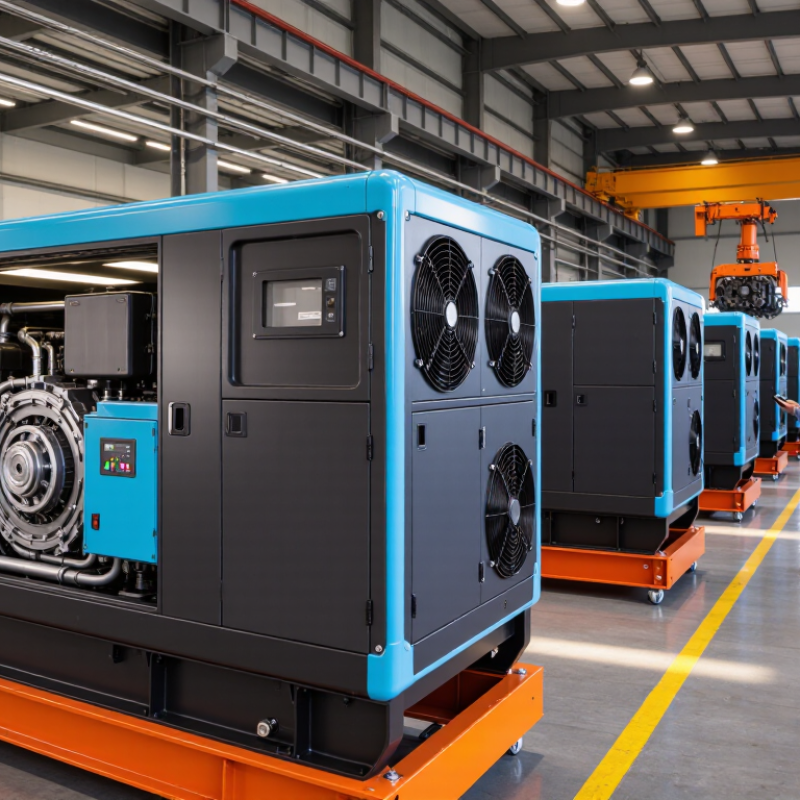
Diesel fuel generators remain practical where grid access is weak or outages can interrupt critical work. In China, common settings include construction sites, remote workshops, farms, and emergency power rooms. A typical set combines a compression-ignition engine, alternator, cooling system, and control panel. Operators must match generator capacity to starting loads, not just the average demand. Motors can draw a brief surge.
China’s electricity demand gives this backup role wider context. The China Electricity Council reported national electricity consumption of about 9.85 trillion kWh in 2024, up 6.8% from 2023. That figure does not measure generator sales, but it shows the scale of the power system these units support. On site, heat, dust, altitude, and poor maintenance can reduce output or shorten engine life. Small details matter.
Modern systems may add electronic controls, exhaust after-treatment, and remote monitoring. Their value depends on correct sizing, fuel quality, routine load testing, and access to service parts. Operators should also check local emissions and noise requirements before installation. Not a perfect fix. Diesel sets still produce exhaust and need dependable fuel storage; they work best as carefully maintained backup, rather than a substitute for reliable grid supply.
China’s diesel-generator manufacturing market is structured around component suppliers, system integrators, and export-oriented assemblers. Engine, alternator, control-panel, cooling, and enclosure makers supply different parts of the chain. Integrators combine them into complete sets, then test output, fuel use, noise, and load response. Some factories make several components in-house; others rely on specialist suppliers. The neat division is not always neat.
The China Electricity Council’s 2023 power-industry statistics reported roughly 2.92 billion kW of installed generating capacity nationwide, including about 1.39 billion kW of thermal capacity. These figures describe the wider power system, not diesel-generator production, but they show the scale of China’s electricity equipment ecosystem. Within it, diesel sets serve standby, mobile, and off-grid needs, with specifications shaped by operating hours, site conditions, and local service capacity. Factory capability alone is not enough; spare-parts access can decide whether a unit is practical.
Tips: Compare rated and standby output, fuel consumption at partial load, test documentation, and service response times. Ask how the supplier handles replacement parts after delivery.
When comparing Chinese diesel generator manufacturers, start with the rating, not the headline price. Check whether quoted output is standby or prime power, and ask for the ISO 8528-1 rating conditions. A 500 kW set may not deliver 500 kW continuously. Request fuel-consumption figures at 25%, 50%, 75%, and 100% load, backed by witnessed test records. Numbers matter.
Build quality needs evidence. Review the alternator’s insulation class, engine protection settings, cooling design, and enclosure noise data. Ask for factory acceptance test results, including voltage regulation, frequency stability, and performance under a sudden load step. A clean test sheet helps, but it cannot replace inspection of production controls and component traceability. Check how warranty terms define operating hours, response times, and replacement parts.
Service support matters as much as rated output. Uptime Institute’s 2024 Annual Outage Analysis reported that 54% of surveyed organizations said their most recent significant data-center outage cost more than $100,000. That is a data-center sample, not a universal generator benchmark, but it shows why service delays deserve serious scrutiny. Ask for parts lead times, technician coverage near your site, and a clear escalation path. Ask for proof. One weak point in many evaluations is relying on polished brochures; verify claims against test reports and references from installations with similar loads.
Profiles of China’s Top 10 Diesel Fuel Generator Manufacturers should compare evidence, not rely on ranking claims alone. A useful profile covers manufacturing experience, product range, rated output, and quality-control procedures. It should also explain whether a manufacturer builds complete generator sets or mainly assembles components. These distinctions matter when comparing suppliers.
Look for verifiable details: factory capacity, inspection records, warranty terms, and access to spare parts. Technical profiles should identify standby and continuous power ratings, fuel consumption conditions, noise levels, and cooling methods. A photograph of a production line can help, but it cannot confirm performance. Ask for test reports and clarify how specifications were measured. Some public profiles may omit important data. That is worth noting, not guessing around.
Tips: Match the generator’s output to the actual load, including motor-starting surges. Request a written quotation with configuration details, service coverage, and delivery terms. Check references where possible. Details matter. If two profiles seem equally strong, compare the evidence behind their claims, not just their advertised capacity.
These reference points illustrate commonly available diesel generator output capacities, from small standby units to large industrial systems. They are not sales figures or a ranking of manufacturers.
China Top 10 Diesel Fuel Generator Manufacturers
Comparing Product Range, Applications, and After-Sales Support
A useful comparison starts with the full product range, not just maximum output. Manufacturers may offer compact units for workshops, larger sets for factories, and standby systems for hospitals or commercial buildings. Check whether ratings cover continuous and standby operation. They are not interchangeable. Ask about fuel consumption at typical loads, noise control, enclosure options, and compatibility with automatic transfer equipment. Small details count. A set sized only for peak demand may run inefficiently during quieter hours.
Applications also shape the right choice. A construction site may need a transportable unit with a reinforced frame, while a data facility may prioritize stable voltage and routine maintenance access. Compare service intervals, spare-parts availability, and the clarity of operating documents. After-sales support deserves equal attention: confirm technician coverage in your region, response arrangements, warranty terms, and training for operators. That matters. A polished catalogue cannot prove that help will arrive promptly. Request written service details and speak with existing users when possible. I would still treat any comparison table as a starting point; real workloads, local service capacity, and installation conditions can change the result.
This overview compares ten common diesel-generator product profiles available from manufacturers in China. It is not a ranked directory of named companies. Output bands and configurations are indicative; actual specifications and service terms vary by supplier and model.
| No. | Product profile | Typical output range | Common configurations | Typical applications | After-sales support to compare |
|---|---|---|---|---|---|
| 1 | Compact open-frame sets | Approximately 5–30 kVA | Single- or three-phase options; manual or electric starting; open skid frame. | Small workshops, farms, temporary work sites, and backup for light commercial loads. | Confirm commissioning guidance, spare-parts availability, warranty coverage, and access to local repair technicians. |
| 2 | Small sound-attenuated sets | Approximately 10–100 kVA | Weather-protective acoustic enclosure; control panel and engine monitoring; optional automatic transfer switch. | Shops, offices, small buildings, clinics, and residential backup installations. | Check enclosure and control-panel warranty, installation requirements, routine-maintenance instructions, and response arrangements. |
| 3 | Commercial open-skid sets | Approximately 50–500 kVA | Industrial skid-mounted package; open or enclosed versions; options for remote monitoring and automatic start. | Factories, warehouses, commercial buildings, and construction sites. | Compare commissioning and load-testing services, parts lead times, service coverage, and written warranty exclusions. |
| 4 | Medium-capacity acoustic sets | Approximately 100–800 kVA | Enclosed package with radiator cooling; control and protection functions depend on the selected controller and configuration. | Hotels, hospitals, data rooms, commercial facilities, and noise-sensitive sites. | Verify documented sound-test conditions, ventilation requirements, maintenance access, and availability of qualified service personnel. |
| 5 | High-capacity industrial sets | Approximately 500–2,000 kVA | Heavy-duty skid-mounted packages; open, acoustic, or project-specific enclosure options; synchronization may be specified. | Large factories, mining operations, infrastructure projects, and major commercial facilities. | Ask for installation supervision, commissioning records, recommended spare-parts lists, and support for synchronizing equipment where applicable. |
| 6 | Containerized power units | Commonly about 500–2,500 kVA per unit, subject to design | Generator package housed in a container or engineered enclosure; may include ventilation, exhaust, and access provisions. | Remote projects, temporary power plants, mining sites, and large infrastructure works. | Confirm transport and lifting requirements, site-interface drawings, commissioning scope, and responsibility for container systems. |
| 7 | Mobile trailer-mounted sets | Commonly about 20–1,000 kVA, depending on trailer and package design | Trailer-mounted generator with towing, stabilizing, and weather-protection features specified for the intended use. | Roadworks, emergency response, events, rental fleets, and temporary construction power. | Check road-use documentation for the destination market, trailer maintenance requirements, parts support, and field-service availability. |
| 8 | Parallel and multi-set systems | System capacity depends on the number and rating of sets | Two or more generator sets connected through synchronization and load-sharing controls; design may support staged operation. | Data centers, hospitals, industrial plants, and facilities requiring scalable or redundant power. | Compare system integration responsibility, factory and site testing, control-system documentation, and troubleshooting support for the complete system. |
| 9 | Telecom and remote-site sets | Often approximately 5–100 kVA, selected to match site load | Compact packages may be configured for remote monitoring, automatic starting, and integration with site power systems. | Telecommunications sites, remote monitoring stations, and other unattended locations. | Verify remote-monitoring compatibility, alarm support, maintenance intervals, and service arrangements in the operating region. |
| 10 | Marine diesel generator sets | Range varies widely by vessel and installation requirements | Marine-oriented engine-generator package; cooling, mounting, exhaust, and electrical configuration must suit the vessel design. | Commercial vessels, workboats, and other marine applications. | Request applicable marine approvals for the intended vessel and market, installation documentation, authorized service details, and parts availability. |
Rating ranges are broad market guide bands, not guaranteed specifications for any individual manufacturer. Compare prime and standby ratings separately, and confirm the applicable test standards, emissions requirements, operating conditions, warranty, and service coverage for each quotation.