What is a Switching Power Supply and How Does it Work?
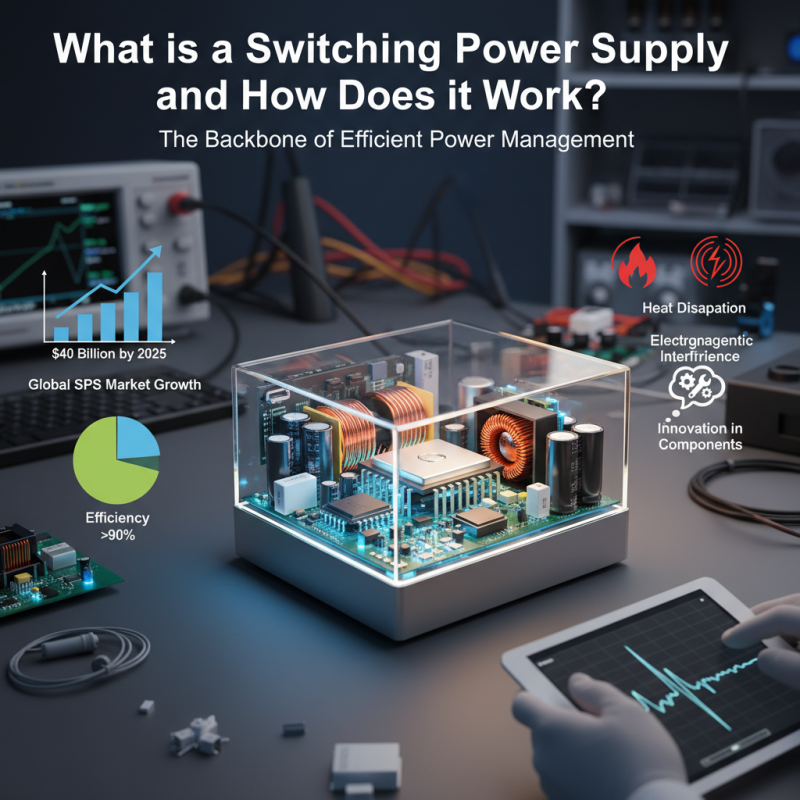
The Switching Power Supply (SPS) is crucial in modern electronic devices. According to a report by industry analyst Mark McCarthy, “Switching Power Supplies are the backbone of efficient power management.” They convert electrical energy with great efficiency, often exceeding 90%. This efficiency is essential for applications in computers, telecommunications, and consumer electronics.
Current trends show that the global SPS market is projected to reach $40 billion by 2025. Such growth highlights the importance of these systems in reducing energy consumption in households and industries. However, despite their advantages, there are challenges. Many devices still face issues with heat dissipation and electromagnetic interference. This can lead to performance losses in critical applications.
Experts stress the need for innovation in the SPS industry. Improvement in components, like capacitors and integrated circuits, is necessary to address these challenges. As fluctuations in power demand increase, the role of Switching Power Supplies becomes more significant. These developments could reshape how we think about energy efficiency in the coming years.
What is a Switching Power Supply?
A switching power supply (SPS) is an essential component in modern electronics. It efficiently converts electrical power from one form to another, typically transforming high-voltage AC into low-voltage DC. This process involves switching elements that rapidly turn on and off to control power conversion, making the system more efficient. According to a report by the International Energy Agency, SPS can improve energy efficiency by 20-30% in various applications.
In many devices, an SPS minimizes energy loss while maintaining performance. This component is crucial in powering everything from computers to televisions. However, it is essential to monitor the heat generated during operation. Excessive heat can reduce the lifespan of electronics. Keeping components cool can help ensure durability.
Tips: Ensure your power supply is rated correctly for your application. Consider using heat sinks or cooling fans as needed. Regular maintenance of electronic devices can prevent issues if the power supply overheats.
SPS technology does have limitations. While it offers high efficiency, it can introduce electrical noise. This interference might affect sensitive components in some systems. Designers often need to balance efficiency with noise reduction, which can be challenging. Moreover, not all switching power supplies are created equal. Some designs may have poorer performance under specific conditions, leading to potential inefficiencies or failures.
Key Components of a Switching Power Supply
Switching power supplies are essential in modern electronics. They convert electrical power efficiently, minimizing losses. The key components of a switching power supply include the input filter, switch, transformer, rectifier, and output filter.
The input filter smooths out voltage fluctuations. It prevents noise from the power source from affecting the supply's performance. The switch, typically a transistor, rapidly turns on and off. This action controls the energy flow into the transformer. The transformer steps voltage levels up or down while isolating the output.
The rectifier then converts alternating current (AC) back to direct current (DC), a necessary step for most electronic devices. Finally, the output filter smooths the current to provide a stable power supply.
Tips: Regularly check component temperatures to avoid overheating. Monitoring these factors can help extend the power supply’s life. Remember, the balance between performance and efficiency is not always straightforward. Overemphasis on efficiency may compromise reliability.
Investing in quality components leads to better performance. However, even top-tier components can fail unexpectedly. A thoughtful design can mitigate these risks while still delivering the required output.
The Working Principle of a Switching Power Supply
A switching power supply is an essential component in modern electronics. It converts electrical energy efficiently. The working principle is based on energy storage and conversion. This process involves several stages.
At its core, a switching power supply uses a switch to control the flow of electricity. This switch rapidly opens and closes. When it’s closed, current flows through an inductor, storing energy. Once the switch opens, the energy is released to the output. This results in a smoother, regulated voltage supply. The rapid switching minimizes energy loss, which is vital for efficiency.
However, the design of a switching power supply isn't perfect. Noise can be generated during operation. This noise can interfere with nearby components. Engineers often face challenges in balancing efficiency and noise suppression. They must consider circuit layout and component selection carefully. An imperfect design can lead to overheating or signal disturbance. Continuous improvement and testing are crucial in creating a reliable power supply.
Advantages of Using Switching Power Supplies
Switching power supplies offer several advantages that make them a popular choice in various applications. Their efficiency stands out. Unlike traditional power supplies, which can waste energy as heat, switching power supplies convert power with minimal losses. This efficiency leads to lower electricity bills and reduced cooling needs for electronic devices.
Another notable benefit is their compact size. Due to their design, switching power supplies can be much smaller than linear power supplies. This allows for sleek and lightweight devices, essential for modern electronics. However, some may find the complexity daunting. It requires precise engineering to avoid noise and interference.
Flexibility is also a crucial advantage. Switching power supplies can easily adjust to different input and output voltages. This adaptability makes them suitable for a wide range of applications. Still, designers must consider the potential challenges. Managing electromagnetic interference (EMI) is vital, as it can affect device performance. The benefits are clear, but careful planning is necessary to address these concerns.
Common Applications of Switching Power Supplies
Switching power supplies are widely used in various applications due to their efficiency and compact size. One common use is in computers. They convert high voltage from the wall outlet into usable low voltages for internal components. This conversion process is essential. Without it, devices would not function properly.
Another popular application is in household appliances. Many modern kitchen gadgets like blenders and microwaves utilize switching power supplies. These devices need steady voltage to operate safely and effectively. Additionally, they help to reduce energy consumption, which is increasingly important in today's eco-conscious market.
In LED lighting, switching power supplies also play a crucial role. They ensure that lights receive a consistent power flow, which enhances performance and lifespan. However, not all designs work seamlessly. Some users report flickering lights or inefficient energy use. This can be frustrating and may require further investigation. Even the most advanced designs may have limitations, making it essential to choose the right one for specific needs.
Switching Power Supplies: Voltage Efficiency Over Time