Why Are Photoelectric Sensors Essential for Modern Automation?
In today's fast-paced industrial world, automation plays a crucial role. At the core of this evolution are Photoelectric Sensors. These devices detect objects without direct contact. They use light to sense changes in their environment. This technology enhances efficiency across various sectors.
Photoelectric Sensors are versatile and reliable. They can detect everything from small parts to large objects. The ability to operate in harsh environments showcases their durability. However, reliance on technology has its drawbacks. Sensor malfunctions can lead to production delays. Regular maintenance is essential to avoid these issues.
As industries move forward, the demand for precise automation grows. Understanding the importance of Photoelectric Sensors becomes vital. They not only streamline processes but also improve safety. Yet, one must reflect on their limitations. Are we overly dependent on technology for simple tasks? Striking a balance between automation and human intervention is imperative.
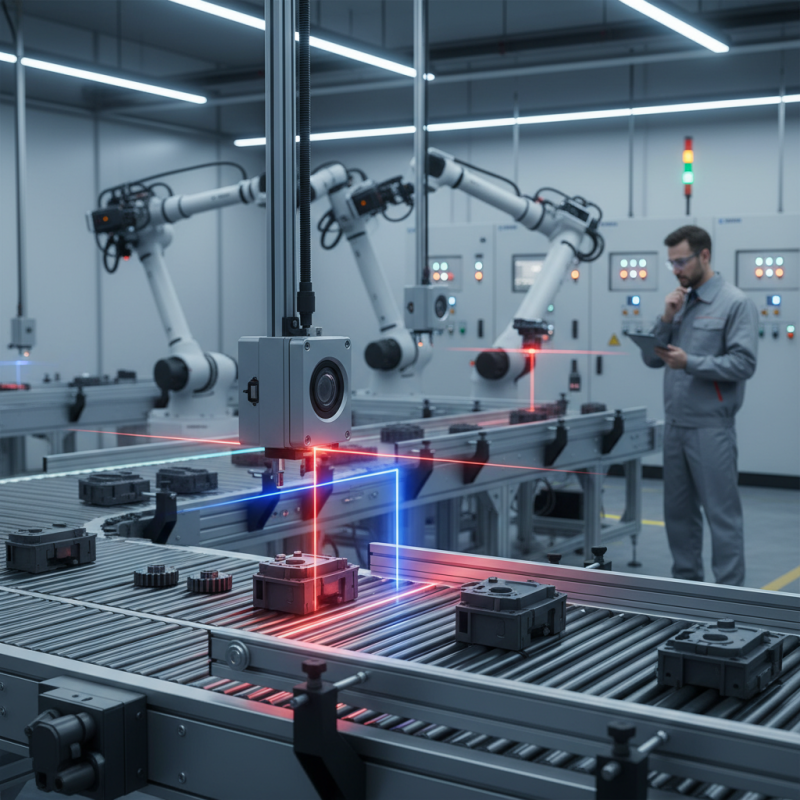
The Role of Photoelectric Sensors in Modern Automation Systems
Photoelectric sensors play a crucial role in modern automation systems. These devices detect the presence of objects without physical contact. According to a report by MarketsandMarkets, the photoelectric sensor market is projected to grow from $2.2 billion in 2021 to $3.4 billion by 2026. This growth highlights their importance in various industries.
In manufacturing, efficiency is vital. Photoelectric sensors help in quality control and automation. They reduce errors by providing precise measurements. Industrial robots use them to navigate and work seamlessly. However, challenges exist. Environmental factors like dust and vibration can hinder their performance. That’s why ongoing calibration is essential.
Furthermore, implementing photoelectric sensors requires thoughtful planning. Integration into existing systems can be complex. Not every sensor suits every application. A mismatch can lead to operational delays. Yet, their ability to streamline processes makes them worthy of consideration in automation strategies. As technology advances, ongoing evaluation of these sensors will be necessary.
Types of Photoelectric Sensors and Their Applications in Industry
Photoelectric sensors play a vital role in modern automation. They detect objects, changes in surface conditions, and material types through light signals. Various types exist: through-beam, retro-reflective, and diffuse sensors. Each type serves distinct purposes, tailored to specific needs in industrial settings.
In manufacturing, through-beam sensors excel in long-range detection. They are often used on conveyor belts, ensuring items are tracked efficiently. Retro-reflective sensors are popular for packaging applications. They minimize space requirements while delivering reliable performance. Diffuse sensors, on the other hand, are well-suited for detecting small objects at close ranges.
According to a market report by Industry Research, the photoelectric sensor market is expected to grow by 8% annually, highlighting their increasing importance.
However, there are challenges. Installation can sometimes be complex, and sensors may require regular recalibration. Ambient light and dirt can affect performance, leading to false readings. This necessitates a suitable environmental assessment before installation. Adapting sensor types to specific conditions is crucial for optimal functioning. Each application brings unique demands. Thus, understanding sensor limitations and applications remains essential.
Market Trends: Growth and Adoption of Photoelectric Sensors in Automation
Photoelectric sensors play a crucial role in the evolution of automation technology. Over the past few years, the market for these sensors has expanded significantly. Factors driving this growth include their versatility and reliability. They are essential for various applications, from packaging to material handling. Companies find them invaluable due to their ability to detect objects without direct contact.
The adoption of photoelectric sensors is accelerating across industries. Manufacturers are increasingly integrating these sensors into their operations. They help improve efficiency and reduce operational costs. However, some manufacturers face challenges in implementing these technologies. For instance, selecting the appropriate sensor for specific applications can be confusing. There are numerous types, each with distinct features. Understanding the differences is crucial for optimal performance.
As automation continues to evolve, the demand for advanced sensing technologies will rise. Photoelectric sensors will likely play an even larger role in this transformation. But not all companies are fully prepared for this shift. Some may hesitate due to initial costs or the learning curve involved. Adopting these sensors requires thoughtful consideration and planning.
Why Are Photoelectric Sensors Essential for Modern Automation? - Market Trends: Growth and Adoption of Photoelectric Sensors in Automation
| Year | Market Size (USD Billion) | Growth Rate (%) | Key Applications |
| 2020 | 3.5 | 8.0 | Industrial Automation, Robotics |
| 2021 | 3.8 | 8.6 | Automated Warehousing, Packaging |
| 2022 | 4.2 | 10.5 | Food & Beverage, Pharmaceuticals |
| 2023 | 4.6 | 9.5 | Material Handling, Electronics |
| 2024 | 5.0 | 8.7 | Automated Quality Control, Traffic Management |
Technical Specifications: Performance Metrics of Photoelectric Sensors
Photoelectric sensors are crucial in modern automation systems. They operate by detecting changes in light to signal various processes. Their performance metrics are essential for understanding their effectiveness. According to a recent industry report, photoelectric sensors can achieve response times as low as 1 ms. This rapid response is vital in applications needing precision.
Another significant metric is the sensing distance. Many photoelectric sensors can detect objects from over 1 meter away. Some advanced sensors even extend this range to 10 meters. This capability enhances flexibility in automation setups, allowing for diverse applications. Additionally, the accuracy rate often exceeds 99%. Such precision minimizes errors in automated tasks.
However, it’s worth noting some challenges. For instance, environmental factors can impact performance. Dust or other obstructions may interfere with light beams. This can lead to false readings or missed detections. Users must account for these limitations when designing systems. Continuous testing and adjustments are often necessary to ensure optimal function. Understanding these specifications helps industries make informed choices.
Case Studies: Successful Implementation of Photoelectric Sensors in Automation
Photoelectric sensors play a vital role in modern automation. Their ability to detect objects without physical contact enhances efficiency. Many industries have successfully implemented these sensors to streamline processes.
In one case, a packaging facility faced issues with speed and accuracy. The existing system often failed to detect items on the conveyor. After switching to photoelectric sensors, the company saw a 30% increase in productivity. Products were sorted correctly and at a much faster rate. However, the initial setup presented challenges. Some sensors were misaligned, causing detection errors, which required further adjustments.
Another example is in automotive manufacturing. A factory integrated photoelectric sensors for quality control. These sensors can identify defects in components instantly. This automation reduced the need for manual inspection.
Yet, the system wasn’t perfect. There were instances of false positives, leading to waste. Continuous evaluations are essential to improve reliability and performance. These examples highlight both the potential and the limitations of photoelectric sensors in automation.