What is an Industrial Network Switch and How Does it Work?
Industrial network switches play a vital role in today's industrial environments. These devices facilitate communication between various machines and systems. They are designed to operate reliably under harsh conditions.
An industrial network switch ensures data packets travel efficiently. This process helps maintain seamless operations in manufacturing and process control. However, not all switches are created equal. Choosing the right one can be challenging. Factors such as durability, speed, and network architecture must be considered.
Understanding how an industrial network switch functions is crucial. It provides insights into improving network performance. Moreover, it helps identify potential pitfalls in network design. Exploring these elements can lead to better implementation and efficiency.
Definition of an Industrial Network Switch
An industrial network switch is a crucial component in modern manufacturing and industrial settings. It facilitates communication between various devices, such as sensors and machines. This switch ensures data packets are transmitted efficiently through a robust network. In environments with harsh conditions, the durability of these switches becomes vital.
These switches usually have multiple ports for connecting different devices. They can support various communication protocols. This flexibility allows different systems to interact seamlessly. However, challenges can arise in complex networks. Issues like latency or packet loss may hinder performance.
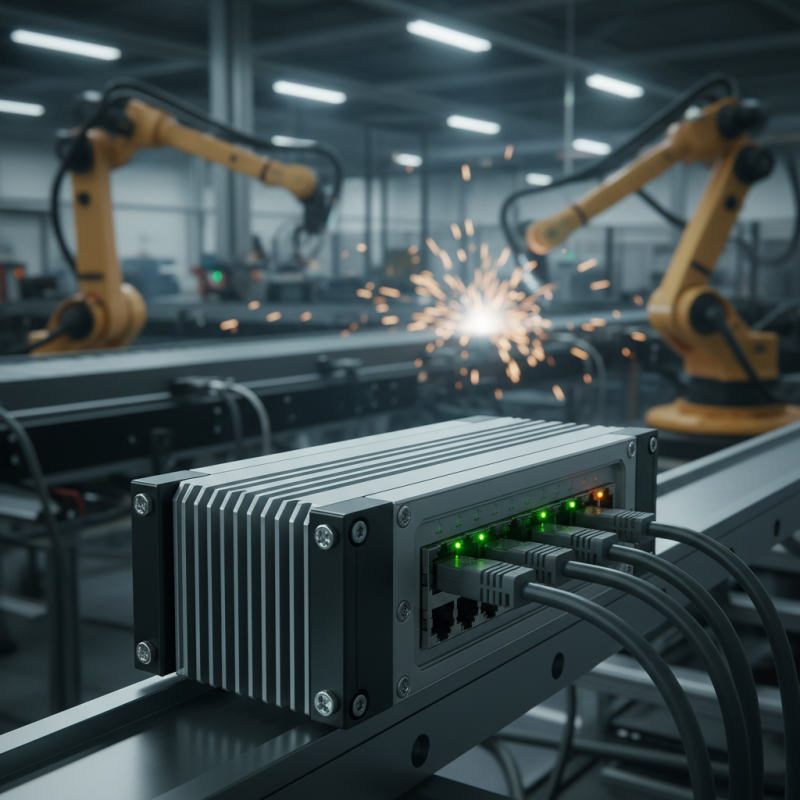
In practical terms, consider a factory floor. Here, an industrial network switch manages real-time data from machines. If one connection fails, the entire operation can be affected. Regular maintenance and monitoring are essential. Being proactive can help identify issues before they escalate, improving overall reliability. An effective industrial network switch contributes significantly to an efficient and smooth-running operation.
What is an Industrial Network Switch and How Does it Work?
| Feature | Description |
| Definition | An industrial network switch is a device used to connect multiple devices within an industrial environment, providing robust networking solutions for harsh conditions. |
| Purpose | To facilitate reliable data communication between industrial machinery, sensors, and control systems. |
| Key Characteristics | Durability, temperature tolerance, electromagnetic compatibility, and enhanced security features. |
| Data Transmission Method | Uses Ethernet technology, with various protocols such as TCP/IP for effective data packet handling. |
| Ports | Typically features multiple Ethernet ports, including options for fiber optics and POE (Power over Ethernet). |
| Applications | Used in manufacturing facilities, transportation systems, energy sectors, and any environments requiring stable network connectivity. |
| Benefits | Increased network reliability, reduced downtime, enhanced communication efficiency among devices. |
Key Features of Industrial Network Switches
Industrial network switches play a vital role in maintaining seamless communication in industrial environments. They facilitate the connection of multiple devices, ensuring reliable data transfer. Notably, these switches are designed to handle harsh conditions, meeting specific industrial standards. Their durability often exceeds that of standard networking devices. Reports indicate that the industrial switch market is projected to grow at a CAGR of 10.2% from 2021 to 2028.
Key features of industrial network switches include wide temperature ranges, rugged housings, and advanced security measures. These switches often operate in temperatures ranging from -40°C to 75°C. A significant percentage of industrial switches come with IP ratings, ensuring they resist dust and water. Additionally, many models support Power over Ethernet (PoE), enabling simplified wiring and efficient power management. The ability to create extensive networks with minimal latency is also critical.
Tip: When selecting an industrial switch, assess your specific needs. Consider the environment and potential hazards. Ensure the device can withstand operation in those conditions.
One flaw in many switches is their complex configuration. Users can find themselves overwhelmed by options. This complexity can lead to misconfiguration, resulting in network downtime. Therefore, training staff on these devices is essential. Clear guidance will reduce errors and enhance operational efficiency.
How Industrial Network Switches Function
Industrial network switches play a crucial role in connecting devices within a network. They are designed to withstand harsh environments, such as extreme temperatures and vibrations. These switches use Ethernet technology to manage data traffic efficiently. Each port on an industrial switch can receive and send data simultaneously. This bidirectional capability enhances communication speed.
Functionality is essential. Industrial network switches use Layer 2 and Layer 3 protocols. Layer 2 deals with MAC addresses, while Layer 3 involves IP addresses. Some switches also offer advanced features like VLANs for segmenting networks. However, configuring these settings can be complex. Users sometimes struggle with misconfigurations that lead to network issues.
An important aspect to consider is redundancy. Industrial networks require high availability. Network switches often support redundant power supplies and dual-port designs. These features help maintain uptime. Yet, redundancy can add to the cost and complexity of the network. Balancing performance, reliability, and budget is a common challenge for many users.
Applications of Industrial Network Switches in Industry
Industrial network switches play a crucial role in various industrial applications. These devices facilitate reliable communication between machines, sensors, and controllers in factories. They optimize network performance, ensuring minimal downtime. According to a report by Markets and Markets, the industrial Ethernet switch market is projected to reach $2.3 billion by 2025, driven by the rise of smart factories.
Applications of industrial network switches are diverse. In manufacturing, they connect devices on the production floor, enabling real-time data exchange. This enhances automation and improves efficiency. In transportation, switches help manage systems like traffic control and fleet monitoring. More industries, such as utilities, are integrating these switches to ensure sustainability and operational efficiency.
Tips: When choosing an industrial network switch, consider the environmental conditions. Some switches may struggle in extreme temperatures or robust vibration. Always examine the specifications carefully. Regular monitoring of network performance is vital. This ensures any potential issues are identified quickly, preventing costly downtime.
Applications of Industrial Network Switches in Industry
Benefits of Using Industrial Network Switches
Industrial network switches play a crucial role in connecting various devices within a manufacturing or industrial environment. They provide reliable data transmission by ensuring that each device communicates effectively. One of the primary benefits of using these switches is their ability to handle large volumes of data traffic without compromising performance. This is essential in settings like factories where numerous machines operate simultaneously.
In addition to high performance, industrial network switches are built to withstand harsh conditions. They can endure extreme temperatures, humidity, and vibrations often present in industrial settings. This durability reduces maintenance needs and enhances overall reliability. Moreover, these switches often feature enhanced security protocols that help in protecting sensitive data from potential breaches.
However, installing industrial network switches can be complex. Organizations must correctly configure the network to ensure optimal performance. Misconfigurations can lead to data loss or downtime. It is vital to approach this task thoughtfully, focusing on both efficiency and security. Balancing these aspects can be challenging yet rewarding. Investing time in understanding the system's requirements yields significant long-term benefits.