
A Hengchang Quilting Machine is used to stitch decorative or functional patterns through layered materials, often joining a quilt top, batting, and backing. In a workshop, that may mean guiding a broad fabric panel beneath a long quilting head while the needle forms even rows of stitches. The result can be a finished quilt with consistent texture and secure layers. The exact tasks depend on the machine model, its controls, and the operator’s setup.
A note on attribution: no verified expert quotation was provided, so the line below is an illustrative placeholder, not a confirmed statement. A Hengchang application specialist named Alex Chen might put it this way: “A quilting machine turns careful fabric preparation into repeatable stitching across the whole panel.” Please verify the expert’s identity and wording before publishing. That matters.
This introduction examines what the machine can do in practical terms: quilt bedding panels, add patterned stitching, and support repeatable production. It also considers material handling, stitch planning, and the value of testing settings on a fabric sample before starting a full piece. These details are easy to overlook. A machine cannot correct every mismatch between fabric layers or an unsuitable setup. Operators still need judgment, patience, and a careful eye on stitch quality.
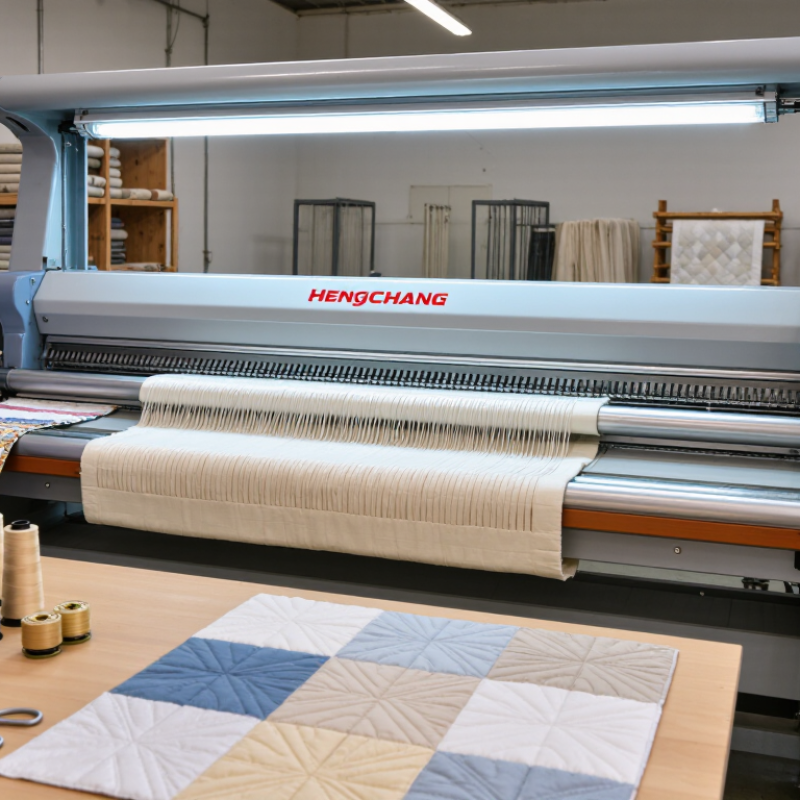
A quilting machine’s primary purpose is to join a quilt top, batting, and backing with evenly spaced stitches. The stitches hold the layers in place, helping prevent the batting from shifting or bunching during use. They can also create visible patterns, from straight parallel lines to curves and repeating motifs. That is the core job. Depending on the machine and its setup, stitching may be guided by hand or follow a programmed design. The machine does not replace careful fabric preparation; uneven layers can still lead to puckers.
For a practical result, an operator checks thread tension, needle choice, and fabric alignment before quilting a full piece. A small test sandwich made from similar materials can reveal skipped stitches or loose loops early. Watch the fabric as it moves. Dense patterns may make a quilt feel firmer, while wider spacing often preserves more softness. Results vary with batting thickness, fabric weight, and stitch density, so settings that work once may need adjustment next time. That learning curve is real. A machine can improve consistency, but it cannot make every design choice for you.
A quilting machine joins a fabric top, batting, and backing into one layered material. Its needle carries thread through all three layers, forming repeated stitches that hold the batting in place. The stitch pattern may be straight, curved, or decorative, depending on the design and machine settings. Small details matter. A presser foot keeps the layers steady, while an even feed helps prevent wrinkles or shifting.
On a frame machine, rollers hold the fabric taut as the sewing head moves across it. Smaller machines may move the quilt beneath a fixed needle instead. In either setup, the operator watches stitch length and thread tension; loose tension can leave loops underneath, while tight tension may pucker the surface. The machine does the stitching, but setup still takes judgment. A slightly uneven first pass is not unusual, and it can reveal where the layers are slipping. Checking the fabric from both sides helps catch problems before they spread across a larger section.
Quilting machines join a top fabric, a filling layer, and a backing with repeated stitches. Common face fabrics include cotton, polyester, and cotton-polyester blends. Cotton is breathable and easy to handle, while polyester often offers better resistance to shrinkage. Lightweight woven fabrics feed smoothly; denim and other heavy cloth may need a stronger needle and slower speed. Test a small swatch first.
The filling, or batting, may be polyester, cotton, wool, or a blend. Each compresses differently under the presser foot, so stitch tension and spacing can affect the finished loft. Textile Exchange’s Materials Market Report 2024 estimates global fiber production reached 124 million tonnes in 2023, with polyester accounting for about 57% and cotton about 20%. That figure describes fiber production, not quilting-machine capacity. I would not treat it as a compatibility guide.
A stable sandwich matters. If the backing is slippery or the batting shifts, use suitable stabilizing methods and check the first rows for puckering. Very thick or lofty assemblies can exceed a machine’s clearance, even when each fabric layer seems manageable. Small details count. Always follow the machine’s specifications, and record needle size, fabric combination, and stitch settings when a sample works.
A quilting machine stitches through the layers of a quilt sandwich. A typical sandwich has one quilt top, one batting layer, and one backing layer; materials may include cotton or polyester fabrics and cotton, polyester, or wool batting.
Typical quilt sandwich: three main layers. Materials and construction can vary by project.
Products Made with an Industrial Quilting Machine
A quilting machine stitches fabric layers together, often combining a face fabric, batting, and backing. The resulting panels become comforters, bedspreads, mattress covers, and padded mattress toppers. Different stitch patterns create visible diamonds, waves, or repeating geometric lines. The machine can also produce quilted fabric for pillows, headboards, and some upholstered furniture. Textile Exchange’s 2024 Materials Market Report estimates global fiber production reached 124 million tonnes in 2023, with polyester making up about 57%. That scale reflects the wide range of fibers manufacturers may handle, though each material needs suitable settings and testing.
On a production floor, operators may feed broad fabric rolls through the machine, then cut the quilted output into product panels. Pattern size, stitch density, and layer thickness affect both appearance and feel. A dense stitch can hold filling in place, but may make a comforter feel less lofty. Small details matter. For mattress panels, consistent seams help create a clean surface; for decorative bedding, the stitch itself may be part of the design. Some machines can also quilt upholstery panels, but capacity depends on the machine’s working width, needle system, and material limits. It is easy to focus on speed and overlook hand-feel. A sample run is often the better test.
A quilting machine joins fabric layers with repeated stitches, creating padded panels for bedding, furniture, and other products. In bedding factories, it can stitch comforters, mattress covers, and bedspreads. Operators select stitch patterns and adjust feed settings to suit different fabric weights. The needle must pass through the full layer stack without puckering the surface. Small details matter.
Furniture and upholstery workshops use quilted panels on sofa cushions, headboards, and decorative wall coverings. Automotive suppliers may use similar equipment for seat inserts and door panels, where consistent seams help keep padding in place. Smaller contract shops also use quilting machines for short production runs. These settings differ: a large bedding line prioritizes speed, while a workshop may need flexibility.
Demand comes from a substantial home-textile sector. Grand View Research’s 2023 Home Textile Market report valued the global market at USD 125.5 billion in 2022 and projected 6.5% annual growth from 2023 to 2030. This figure covers a broad product category, not quilting machines alone. A quilting line is not automatically a good fit for every factory. Material trials can reveal skipped stitches, uneven feeding, or slow changeovers before production scales.
| Industry or Setting | Typical Quilted Products | Purpose of Quilting | Common Materials |
|---|---|---|---|
| Bedding and home-textile factories | Quilt tops, comforters, bedspreads, mattress covers, and padded bed panels | Joins the face fabric, batting or filling, and backing; creates decorative patterns and helps keep the layers in place. | Cotton, polyester, microfiber, polyester batting, and blended fabrics |
| Mattress and sleep-product manufacturing | Quilted mattress panels, mattress toppers, and padded covers | Adds a padded surface and stitched pattern to layered textile panels used in sleep products. | Knitted or woven cover fabrics, foam or fiber padding, and backing fabrics |
| Furniture and upholstery workshops | Quilted upholstery panels, cushions, headboards, and padded covers | Produces decorative stitching and secures padding to fabric before panels are assembled into finished furniture. | Upholstery fabric, synthetic leather, foam, and fiber batting |
| Apparel and garment production | Padded jacket panels, quilted linings, vests, and selected outerwear components | Creates insulated or decorative quilted sections by stitching fabric layers around a filling. | Woven or knitted fabrics, polyester fill, and lightweight linings |
| Automotive and transport-interior suppliers | Quilted seat-cover sections, interior trim panels, and padded decorative inserts | Provides a stitched, layered appearance for interior components; the finished panels are typically assembled into the vehicle interior separately. | Automotive upholstery fabric, synthetic leather, foam, and backing textiles |
| Home-decor and soft-goods producers | Quilted throws, decorative wall panels, table covers, and padded accessories | Combines decorative stitching with light padding for household textile products. | Cotton, polyester, blended fabrics, and lightweight batting |
| Small textile workshops and sample rooms | Prototype panels, custom quilts, short production runs, and pattern samples | Supports product development, made-to-order work, and small-batch quilting where the machine's working width and setup are suitable. | Materials selected for the intended product and machine configuration |
Note: Suitable products, materials, and production capacity depend on the machine's model, working width, stitching system, and configuration. A quilting machine stitches layered textiles; cutting, binding, and final assembly are generally separate operations.