What is Drop Cable and How Does it Impact Your Network?
In today's rapidly evolving digital landscape, the importance of reliable connectivity cannot be overstated. Central to achieving this reliability is the often-overlooked component known as Drop Cable. This specialized cable plays a crucial role in network structure, connecting the main line to individual homes or offices. Understanding Drop Cable’s functionality and its impact on network performance is essential for both businesses and residential users.
Drop Cable contributes directly to the quality of internet service received. Poor quality cables can result in slower speeds, interruptions, and overall dissatisfaction with service providers. In some cases, users may not even realize the role Drop Cable plays in their connectivity issues. This often leads to frustration and the misconception that problems lie with the internet service provider rather than the network’s infrastructure.
Moreover, the environment where Drop Cable is installed can significantly affect its performance. Outdoor conditions, such as temperature fluctuations and moisture levels, can degrade the cable over time. Users must consider these environmental factors to maintain optimal network performance. Investing time in understanding and selecting the right Drop Cable is vital for ensuring a robust network experience.
What is Drop Cable and Its Role in Telecommunications Networks?
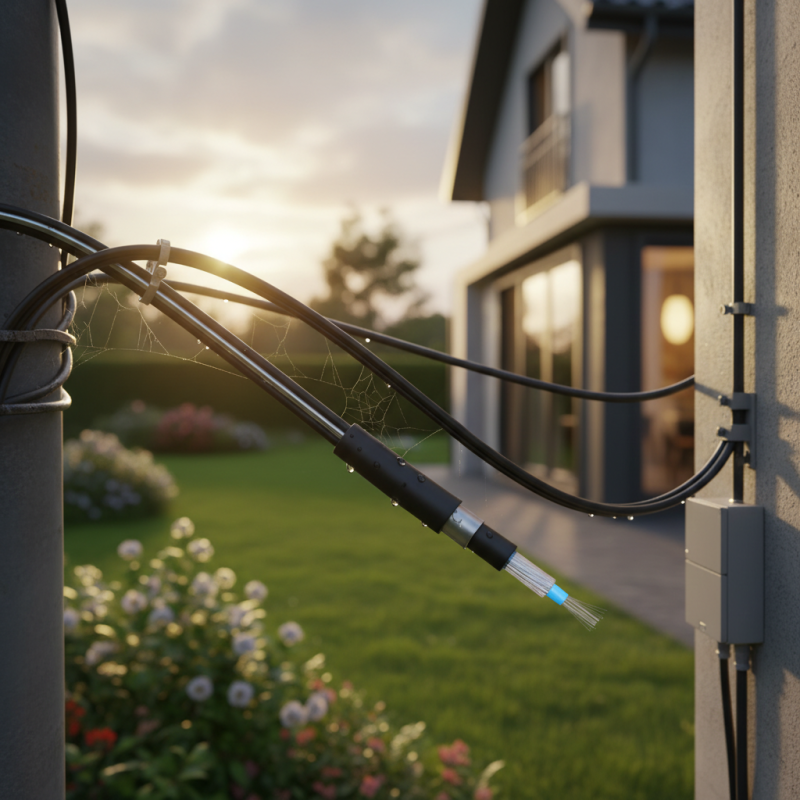
Drop cables are a critical element in telecommunications networks. They connect the central office to end-user premises. Typically, drop cables consist of fibers that deliver high-speed internet directly to homes or businesses. According to a report by the International Telecommunication Union (ITU), fiber optic technologies, including drop cables, can increase internet speeds up to 1 Gbps or more, significantly enhancing user experience.
The installation quality of drop cables can directly affect network performance. Poorly installed cables may lead to signal loss and reduced internet speed. A study from the Fiber Broadband Association highlights that around 70% of service interruptions are linked to installation errors. It's essential for technicians to ensure that drop cables are properly terminated and tested before deployment.
Furthermore, the impact of drop cables extends beyond mere connectivity. They play a vital role in network reliability and resilience. As networks transition to fiber optics, the demand for skilled technicians grows. However, industry reports indicate a skills gap, with many technicians lacking the advanced training needed for proper installation. Addressing this gap is crucial for maintaining quality service in growing telecommunications markets.
Types of Drop Cables: A Comparative Analysis of Fiber vs. Copper
When it comes to drop cables, the choice between fiber and copper can significantly affect network performance. Fiber optic cables use light to transmit data. This allows for incredibly high speeds and vast bandwidth. They are resistant to electromagnetic interference, which makes them reliable in various environments. However, the initial installation cost can be high.
Copper cables, on the other hand, are often more economical and easier to install. They work well for shorter distances and are typically sufficient for residential use. However, copper is more susceptible to interference and has lower bandwidth capabilities compared to fiber. This can lead to slower speeds and reduced performance over time.
Choosing the right drop cable requires a careful assessment of your specific needs. Consider factors such as distance, speed, and budget. Relying solely on one type of cable may not suit every situation. Sometimes, a hybrid solution can provide the best of both worlds, offering flexibility and performance. Reflecting on these aspects can help ensure that the chosen cable aligns with your network requirements.
Industry Standards for Drop Cable Installation and Performance Metrics
Drop cables play a crucial role in network connectivity. They are the final link that connects the main distribution network to individual end-users. Proper installation and adherence to industry standards are vital for optimal performance. Standards such as ANSI/TIA-568 and IEC 60794 outline essential guidelines for drop cable specifications. Following these guidelines ensures reliability and performance consistency across various networking environments.
Performance metrics for drop cables often focus on attenuation, bandwidth, and environmental resilience. Measuring attenuation helps gauge signal loss over distance. Enhanced bandwidth capabilities lead to faster data speeds. Environmental factors also impact durability. Cables must withstand temperature fluctuations and moisture. Regular testing against these metrics is essential for maintaining network integrity.
Improper installation can lead to significant issues. Poor connections may increase signal loss. Inadequate protection from environmental factors could result in cable damage. It's essential to review compliance with established standards. Addressing these gaps can prevent future network disruptions. Ensuring high-quality drop cables contributes to the overall health of a network.
Drop Cable Performance Metrics
This chart illustrates the performance metrics associated with drop cable installations, including signal strength, data rate, latency, and jitter. High signal strength and data rates are indicative of effective installations, while lower latency and jitter values contribute to improved network performance.
Impact of Drop Cable Length on Signal Quality and Network Latency
Drop cables play a crucial role in network connectivity. They connect the main line to the end-user's device. The length of these cables significantly affects both signal quality and network latency. When the drop cable is too long, it can cause a weaker signal. This can lead to buffering and slow downloads.
Signal degradation occurs over distance. For distances beyond the recommended length, the drop cable's effectiveness declines sharply. Users may notice interruptions during online activities. It's important to evaluate the environment where the cable is installed. Obstacles and interference can also impact performance.
In real-world scenarios, installers sometimes overlook drop cable length. It often leads to frustration as users experience lag. Regular testing can help identify issues related to signal quality. Reflection and adjustment of cable lengths may be necessary to optimize performance. In a world increasingly reliant on fast connectivity, these details cannot be ignored.
Future Trends in Drop Cable Technology and Its Implications for Networks
The landscape of drop cable technology is rapidly evolving, and significant trends are emerging that will impact network performance. Industry reports indicate that fiber optic drop cables are projected to see a substantial uptake, with a growth rate of around 15% annually through 2025. This shift is largely driven by increasing demand for high-speed internet. Homes and businesses increasingly rely on faster connection speeds.
New materials and manufacturing techniques are also surfacing. Many telecom companies are looking to embrace lightweight materials that maintain signal integrity while reducing installation costs. However, several challenges persist. For instance, the need for standardized connectors can complicate installations. Some providers may grapple with inconsistent performance across different regions, highlighting a crucial area for improvement.
The integration of smart technology into drop cables is another noteworthy trend. Emerging innovations like sensors embedded in these cables can monitor performance in real-time. This can lead to predictive maintenance and ultimately reduce downtime. Nonetheless, the security implications of connected cables raise questions that the industry must address.
As drop cable technology advances, organizations must prepare for both opportunities and challenges, ensuring robust strategies that consider evolving infrastructure needs.
What is Drop Cable and How Does it Impact Your Network? - Future Trends in Drop Cable Technology and Its Implications for Networks
| Dimension | Details |
| Cable Type | Fiber Optic, Coaxial, Twisted Pair |
| Bandwidth Capacity | Up to 10 Gbps |
| Typical Use Cases | Residential, Commercial, Data Centers |
| Length Variations | 1m to 1000m |
| Installation Flexibility | Easy to install in confined spaces |
| Future Trends | Increased use of eco-friendly materials, Enhanced durability |
| Impact on Network Performance | Improved reliability, Reduced latency |