How to Choose the Best DC Charging Connector for Your Needs?
Selecting the right Dc Charging Connector is critical for efficient electric vehicle (EV) charging. With the surge in EV adoption, understanding connector types and specifications has become more important than ever. According to the International Energy Agency, global electric car sales boosted by over 40% in 2021, highlighting the demand for reliable and efficient charging solutions.
Industry expert Dr. Emily Johnson, a leading figure in EV technology, notes, “The choice of the right DC charging connector can significantly affect charging speed and compatibility.” With various standards in play, including CHAdeMO and CCS, making an informed choice can be daunting. Each type has unique benefits and potential drawbacks, which can lead to challenges in charging efficiency and user experience.
In the fast-evolving landscape of EV infrastructure, the importance of selecting an appropriate DC charging connector cannot be overstated. A suboptimal choice may lead to slower charging times or limited compatibility with different vehicle models. Thus, it’s essential to balance performance with practical needs. Understanding these connectors' nuances can ultimately lead to better investment decisions and enhanced consumer satisfaction.
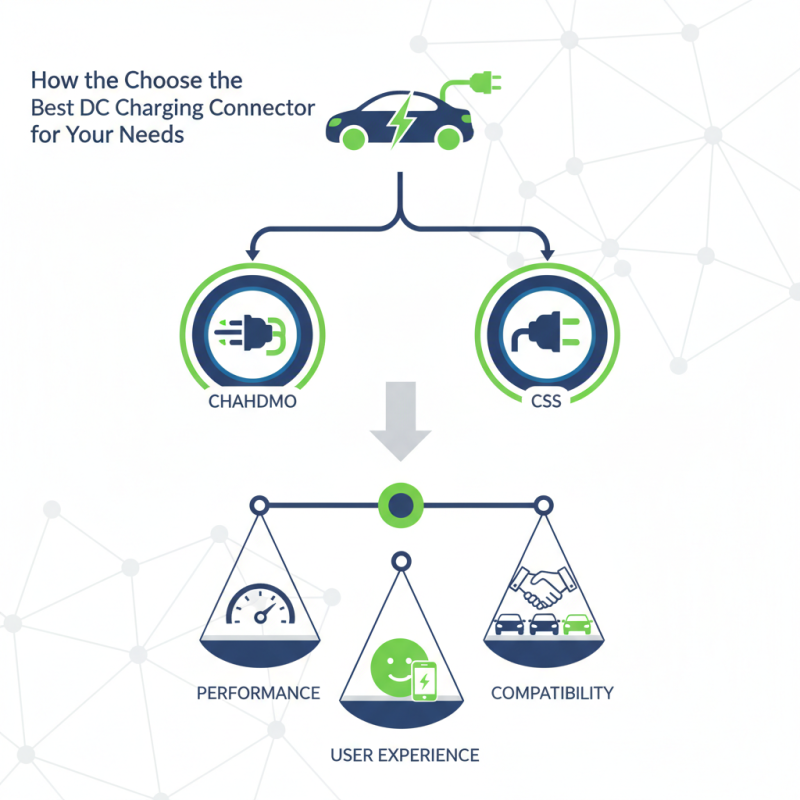
Understanding Different Types of DC Charging Connectors Available
When choosing a DC charging connector, understanding the types available is crucial. There are several standard connectors used globally. The CCS (Combined Charging System) is popular in Europe and North America. It can handle high charging speeds, up to 350 kW, which is ideal for rapid charging stations. Conversely, CHAdeMO, widely used in Asia, supports up to 62.5 kW. Each connector type has unique characteristics that affect compatibility and efficiency.
Data indicates that the global DC fast charging market is projected to grow significantly, reaching over $30 billion by 2027. With increasing electric vehicle (EV) adoption, selecting the right connector matters more than ever. Some manufacturers favor specific connectors. This creates a dilemma for users needing a versatile solution. Notably, Tesla's proprietary connector has raised questions about standardization in the industry.
The choice of connector impacts installation costs and long-term usability. Poor compatibility can lead to inefficient charging times. A study found that 35% of users experience charging issues related to connector incompatibility. This statistic highlights the ongoing need for clarity in standards. It reminds consumers to be well-informed before making a decision, ensuring their connector choice aligns with evolving technology and infrastructure.
Key Factors to Consider When Selecting a DC Charging Connector
Choosing the right DC charging connector is essential for efficient electric vehicle (EV) charging. One key factor is compatibility with your vehicle. Different EV models use various connector types. Researching the specific connector type for your vehicle can save you time and frustration. Not every connector works universally, so always verify.
Another important consideration is charging speed. Look into the connector's charging capabilities. Some connectors offer faster charging rates than others. This can affect your overall charging experience, especially during long trips. You want a connector that meets your needs for speed and efficiency.
It's also wise to think about the environment in which you'll be using the connector. Will you mostly charge at home or in public stations? Public charging stations may have different standards compared to home setups. Assessing your charging habits can guide you in making the right choice. Understanding local infrastructure and the types of connectors available nearby can further inform your decision. Reflect on these aspects to ensure a seamless charging experience.
Compatibility with Electric Vehicles and Charging Stations
Choosing the right DC charging connector is crucial for electric vehicle owners. Compatibility is a key factor, as not all connectors fit every vehicle or charging station. Researching the specific requirements of your electric vehicle model is essential. This ensures you have the necessary equipment to charge efficiently.
Tips for compatibility: Always check the vehicle’s manual for connector specifications. Verify the charging station options in your area. Using adapters can provide flexibility, but they might reduce charging efficiency.
Compatibility issues can lead to frustration. Some users find themselves at charging stations without a suitable connector. This can waste precious time. Additionally, understanding the charging speed of different connectors might influence your choice. A faster charger can save time when on the go. Evaluate your routine to determine which speed works for you.
Remember: Regularly review updates about electric vehicle standards. These guidelines can change as technology evolves. Staying informed will help you ensure your connector meets future compatibility needs.
Safety Standards and Regulations for DC Charging Connectors
When choosing a DC charging connector, safety is paramount. Various organizations set safety standards for these connectors. Understanding these regulations helps ensure reliable performance. For instance, connectors must meet specific voltage and current ratings. Users need to verify that their chosen connectors are certified by recognized authorities.
In addition to safety standards, the design of connectors impacts usability. Some connectors are easier to handle, while others may have complex locking mechanisms, which could frustrate users. It’s critical to consider the environment where the connector will be used. Different environments may expose connectors to moisture or dust. Thus, having a connector with proper ingress protection can enhance safety and longevity.
Knowing the standards can be overwhelming. It can also be challenging to find connectors that meet all requirements. Users might reflect on their specific needs and how these regulations apply. Testing and verifying the connectors in real-world scenarios can also be beneficial. It’s not just about meeting the standards; reliability in everyday use is essential for ensuring safety and efficacy.
Future Trends in DC Charging Connector Technology and Innovation
The evolution of DC charging connector technology is reshaping the electric vehicle (EV) landscape. Innovations in this area are pivotal. New trends indicate that faster charging times are a primary consumer demand. Recent reports show that 60% of EV owners desire connectors that can support high-power charging options. This trend drives manufacturers to prioritize compatibility and efficiency.
Additionally, interoperability remains a major challenge. Current statistics reveal that 35% of users experience frustration with incompatible charging stations. Efforts to standardize connectors are underway, but a unified approach is still lacking. Emerging technologies, like wireless charging, hold potential but require extensive testing.
Safety considerations are also crucial. A study found that over 20% of DC connector incidents relate to overheating. Continuous advancements must address these safety concerns. Implementing smart technologies, like real-time monitoring systems, could mitigate dangers. This highlights the need for a careful balance between innovation and safety in future DC charging connector development.
How to Choose the Best DC Charging Connector for Your Needs? - Future Trends in DC Charging Connector Technology and Innovation
| Connector Type | Charging Speed (kW) | Compatibility | Applications | Future Trends |
| CCS (Combined Charging System) | 150-350 kW | Compatible with most electric vehicles | Fast charging stations, urban areas | High power delivery, integration with renewable energy |
| CHAdeMO | 50 kW | Primarily Nissan, Mitsubishi vehicles | Rapid charging locations | Retrofit solutions, support for vehicle-to-grid technology |
| Type 2 | 22 kW | Widely used in Europe | Public and residential charging | Standardization, improved safety mechanisms |
| GB/T | Maximum 250 kW | China | Compatible with domestic EVs | Growing infrastructure, integration with smart city applications |