How to Choose Outdoor Garden Solar Lights in 2026?
Choosing an Outdoor Garden Solar Light in 2026 means looking beyond a bright product photo. Solar technology is expanding quickly. IEA PVPS’s Snapshot of Global PV Markets 2024 estimates that 456 GW of new solar capacity was installed worldwide in 2023. Cumulative capacity reached about 1.6 TW. That growth shows a mature supply chain, but it does not prove that every garden light performs well.
The details matter at ground level. A panel tucked beneath a leafy eave may collect little sun, even on a long summer day. Check whether the panel is separate, how long the light runs after charging, and whether the battery can be replaced. The U.S. Department of Energy says LEDs use at least 75% less energy than incandescent lighting. Yet an efficient LED cannot compensate for a small panel or poor winter exposure. Weather still decides.
Compare lumen output, beam direction, materials, and stated operating time—not just the number of LEDs. Look for clear test conditions and a warranty that names the covered parts. If a listing promises all-night brightness without describing sunlight or battery capacity, pause. I still check twice. Product claims can sound precise while leaving key details out. This guide explains how to assess brightness, runtime, placement, durability, and value before choosing a light for paths, borders, or a small patio.
Assess Your Garden’s Layout, Lighting Needs, and Sun Exposure
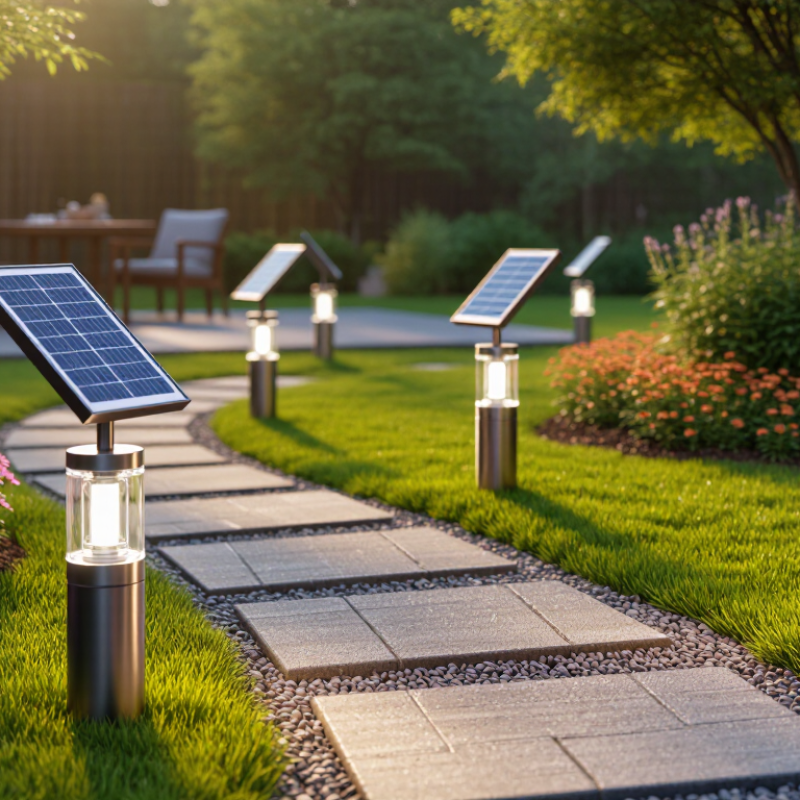
Walk the garden at dusk and note where you actually need light: a narrow path, two slippery steps, or the chair you use after dinner. Map these spots in daylight, too. A quick sketch can reveal gaps hidden by shrubs or low fences. Choose brighter, more focused lights for safe movement, and softer lights for beds or seating areas. Solar lights often mark a route well, but may not provide enough light for detailed tasks. Keep beams pointed down, especially near neighboring windows.
Sun exposure can vary across a small garden. Watch where shadows fall in the morning and afternoon, and check whether trees, walls, or roof eaves shade the panel. Several hours of direct sun can help, but results depend on the light and its battery; check the maker’s stated requirements. A sunny border may suit an integrated panel, while a shaded path may need a light with a separately positioned panel. Seasonal shade matters. Bare branches in spring may later block the sun.
Try placing a few lights before committing to a full layout. Notice whether their glow reaches the ground, not just the leaves. If a path still looks patchy, shift the lights closer together or change their angle. My first layout would probably need adjusting; gardens rarely stay as neat as a sketch. Recheck the spots after plants grow or furniture moves.
Understand Solar Light Types, Brightness, Batteries, and Runtime
Outdoor garden lights fall into three useful types: stake lights for paths, spotlights for trees, and wall or motion lights for entrances. Choose by task, not appearance alone. A soft path marker can guide footsteps, but it may not brighten uneven steps. Check the beam and mounting height after dusk. I still underestimate tree shadows sometimes.
Brightness is measured in lumens; higher numbers help cover wider or darker areas, but can create glare. The U.S. Department of Energy reports that LEDs use at least 75% less energy than incandescent lighting. That lower draw can help a small solar panel and battery support longer nightly use. Look for battery capacity in watt-hours, if listed, and compare it with the light’s power draw. A 2-watt lamp running for six hours needs about 12 watt-hours before conversion losses.
Runtime depends on sunlight, shade, season, panel angle, and battery condition. NREL’s PVWatts tool estimates solar output using location and weather inputs, illustrating why one runtime claim cannot fit every yard. Favor a replaceable battery and a panel that can face the open sky. In winter, even a good setup may dim early. Check the beam.
Compare Materials, Weather Resistance, and Smart Features
When choosing garden solar lights, inspect the housing, not just the finish. Anodized aluminum resists corrosion without adding much weight; stainless steel is sturdy, though lower grades can still stain near salty air. UV-stabilized plastic can be practical, but brittle covers may cloud after years in direct sun. Check how the battery compartment seals, too. That small seam matters. An IP65 rating under IEC 60529 means dust-tight protection and resistance to water jets, not protection against flooding or immersion. Match the rating to your site: a sheltered path needs less exposure protection than an open, rain-soaked border.
Smart features are useful when they solve a real problem. A dusk sensor with adjustable brightness can conserve stored energy on cloudy days, while motion activation suits a gate or shed entrance. Apps and remote controls add convenience, but wireless features cannot make a shaded panel charge faster. The U.S. Department of Energy reports that LEDs use at least 75% less energy than incandescent lighting; that comparison concerns light sources, not complete solar fixtures. Battery capacity, panel size, and winter sunlight still determine runtime. NREL’s review found a median photovoltaic module degradation rate near 0.5% per year, but small garden-light panels may perform differently. Treat that figure as context, not a product-life guarantee. I would prioritize replaceable batteries and accessible screws over extra app settings. It is less flashy. Check the warranty and spare-part availability before buying, since a sealed, non-serviceable light may become disposable when its battery fades.
Check Installation, Maintenance, and Long-Term Value
How to Choose Outdoor Garden Solar Lights in 2026?
A good solar light should fit your garden and your routine. Check how it mounts before buying: a stake suits soft soil, while a wall light needs a stable surface and suitable screws. Look for clear instructions and a battery compartment you can reach without dismantling the whole fixture. Small details matter. A light that is awkward to install may stay in its box longer than expected.
Tips: Place panels where they receive several hours of direct sunlight, away from dense branches and roof shadows. Wipe dust and pollen from the panel with a soft, damp cloth every few weeks. After heavy rain, check for trapped moisture, loose fittings, or shifting stakes. In winter, shorter days can reduce runtime; that is normal, not always a fault.
Consider long-term value, not just the price on the shelf. Replaceable batteries and accessible parts can extend a light’s useful life and reduce waste. Check the stated runtime, but treat it as a guide: shade, temperature, and cloudy weather all affect performance. It is easy to expect every light to stay bright until dawn. Often, that is unrealistic. Choose a brightness level that suits the path or planting bed, and compare the upkeep with how often you will actually use it.
How to Choose Outdoor Garden Solar Lights in 2026
Battery service life is one factor in a solar light’s maintenance needs and long-term value. These typical planning ranges are approximate; actual life depends on battery quality, temperature, charge cycles, and care. The chart shows the midpoint of each range.
Practical tip: Check whether the battery is replaceable and whether the product specifies its battery chemistry. Keep the solar panel clean and positioned for direct sunlight to support reliable charging.