How to Choose the Right Battery Connector for Your Needs?
Choosing the right Battery Connector is crucial in today's technology-driven world. A recent industry report from McKinsey highlights that the global battery connector market is projected to reach $1.2 billion by 2025, driven by the rise in electric vehicle production. Experts like Dr. Alan Chen, a leading figure in the field, state, “Selecting the proper battery connector can significantly impact efficiency and safety.”
Battery connectors are essential in various applications, from consumer electronics to automotive systems. The connection quality directly influences performance. Poor choices can lead to overheating or failure. In many cases, users overlook specifying the right type for their needs. This oversight can result in costly setbacks or safety hazards.
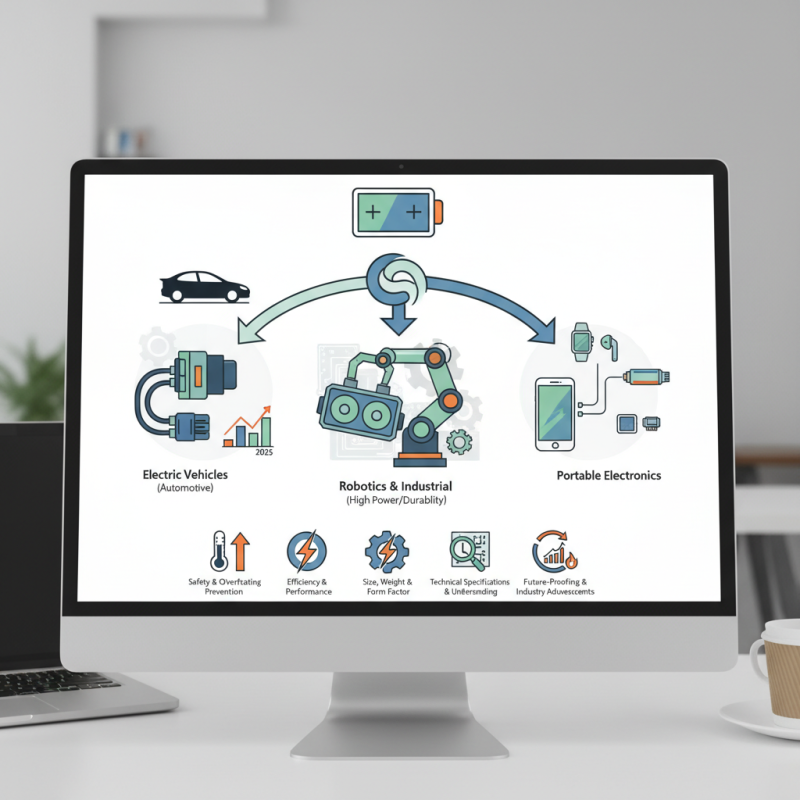
Understanding technical specifications is vital when selecting a battery connector. Robotic applications demand robust connectors with high current ratings. Meanwhile, portable devices may prioritize weight and size. As the industry evolves, keeping abreast of advancements is key. Adapting to these changes is necessary for ensuring optimum performance and reliability.
Understanding Battery Connector Types and Their Applications
When selecting a battery connector, understanding the different types is essential. Battery connectors come in various designs, each catering to specific applications. For instance, blade connectors are popular in automotive settings due to their reliable connection and ease of use. They typically feature a simple male and female structure, making installation straightforward. Another common type is the ring terminal connector. This style ensures a secure fit on battery posts, ideal for stationary applications.
Some connectors serve specialized purposes. For high-current applications, consider using Anderson connectors. They can handle substantial amperage, making them suitable for both industrial and recreational uses. Conversely, JST connectors are favored in compact electronic devices due to their small size and light weight. They may not provide the same durability, so careful selection is necessary based on the environment.
It is vital to reflect on the application environment. Outdoor use may require waterproof connectors, while indoor setups might prioritize compact designs. Weighing the pros and cons of each connector type is essential for optimal performance. Missteps in connector choice can lead to inefficiencies or failures. Always think about not just what works, but why it works.
Evaluating Electrical Specifications for Optimal Performance
Choosing the right battery connector is essential for optimal performance. Evaluating electrical specifications plays a crucial role in this process. Voltage, current rating, and connector type are key factors. A connector must handle the required voltage without risk. If a connector is rated too low, it can lead to a failure in the circuit.
Current rating is another critical aspect. Exceeding the connector's current limit can lead to overheating or melting. This is often overlooked, yet it is vital for safety and longevity. Consider environmental conditions too. High humidity, dust, or extreme temperatures can affect performance.
When selecting a connector, do not just rely on specifications. Consider the actual demands of your specific application. Each scenario might reveal unexpected challenges. For example, some connectors may be difficult to secure in tight spaces. Reflecting on these details ensures a choice that meets all operational requirements.
Identifying Environmental Factors and Durability Requirements
When selecting a battery connector, environmental factors play a crucial role. For instance, connectors must endure humidity, dust, and extreme temperatures. According to a study by the International Electrotechnical Commission, connectors exposed to wet environments can see a correlation with a 30% increase in failure rates if not designed properly. This emphasizes the importance of choosing connectors that have optimal sealing and corrosion resistance.
Durability is another significant aspect. Connectors should withstand mechanical stress and repeated connection cycles. Research indicates that connectors designed with high-density polyethylene can offer durability improvements of up to 50% compared to standard materials. Such data illustrates the need for thorough consideration of material choices and design features to ensure longevity.
Ultimately, understanding the specific conditions your connector will face is essential. Factors like vibration, temperature fluctuations, and exposure to chemicals should dictate your choice. There’s often a gap in understanding how these elements affect performance, sometimes leading to poor decisions. Aiming for connectors that suit your environmental conditions is vital for preventing failures and ensuring efficient operation.
Battery Connector Durability Ratings Based on Environmental Factors
Assessing Compatibility with Different Battery Systems
When choosing a battery connector, compatibility is critical. Different battery systems have unique requirements. Understanding these needs prevents potential issues. Look at voltage ratings and current capacities. Mismatched connectors can cause failures or safety hazards. Take the time to analyze your system specifications.
Assess the physical design of connectors too. Some have locking mechanisms, while others do not. A secure fit is vital for stable performance. Size can affect ease of installation as well. Consider how much space you have within your setup. Larger connectors may not fit in tight spaces.
Research is key before settling on a particular connector. Explore user reviews and experiences. You may find valuable insights into reliable options. Sometimes, connectors labeled for specific systems may not perform as expected. Trusting manufacturers' claims without investigation can lead to regrets. Always weigh the pros and cons based on your needs.
How to Choose the Right Battery Connector for Your Needs?
| Connector Type | Current Rating (Amps) | Voltage Rating (Volts) | Typical Use Case | Material | Compatibility |
| XT60 | 60 | 14 | RC models | PVC and copper | Compatible with LiPo batteries |
| Anderson Powerpole | 45 | 50 | General use | Polycarbonate and copper | Versatile across battery types |
| Deans T-Plug | 60 | 11 | RC cars and drones | PVC and copper | Common in hobby applications |
| JST Connector | 3 | 12 | Small devices | Plastic and copper | Typically used in electronics |
| Molex Connector | 15 | 10 | Computers and peripherals | Plastic and copper | Common in PC applications |
Making Informed Decisions: Cost vs. Quality Considerations
When selecting a battery connector, the decision often boils down to cost versus quality. Recent industry reports show that choosing cheaper options can lead to higher long-term costs. A study indicates that 30% of low-cost connectors fail within the first year of use. This results in unexpected downtimes and additional expenses for replacement or repair. It is critical to understand that while lower prices are attractive, they frequently compromise reliability.
Quality connectors, on the other hand, typically come with superior materials and engineering. They enhance performance and longevity. A report from the Connector Manufacturers Association suggests that investing in high-quality connectors can save users up to 25% in maintenance costs over five years. These connectors often perform better in extreme conditions, thus reducing the risk of failure.
Despite these statistics, many still prioritize immediate costs over future savings. This short-sightedness can lead to operational inefficiencies. Users should weigh these factors carefully before making a decision. The balance between cost and quality is not always clear-cut. Investing wisely can lead to a more reliable and efficient setup.