
China Best All Aluminum Interior Doors for Global Buyers

China Best All-Aluminum Interior Doors for Global Buyers introduces a practical guide to selecting durable, refined, and export-ready door systems. All-Aluminum Interior Doors are becoming popular in apartments, hotels, offices, and modern villas. Their slim frames create wider glass openings. Their powder-coated surfaces resist moisture, scratches, and daily cleaning.

Dieter Rams, a respected product designer, said, “Good design is as little design as possible.” This principle fits aluminum interior doors well. Strong engineering should remain quiet. Clean lines should support the room, not dominate it. However, aluminum is not automatically perfect. Buyers must check alloy grade, wall thickness, hinge quality, seal performance, coating standards, and installation accuracy.

Details matter.

A factory may offer beautiful samples but inconsistent corner joints. A low price may hide weak hardware or limited after-sales support. Experienced buyers should request test reports, production photographs, packaging details, and project references. They should also confirm door dimensions before mass production. A three-millimeter error can affect the entire installation.

China has a broad manufacturing base for customized interior doors. Many suppliers can provide colors, glass types, opening styles, and concealed frames. Yet capability differs between factories. Reliable evaluation requires more than comparing quotations. It requires reviewing drawings, hardware brands, inspection procedures, and communication quality.

This guide will examine the practical choices behind China’s best All-Aluminum Interior Doors. It will discuss performance, design, customization, pricing, and supplier reliability. Some conclusions may challenge common buying habits. That is useful. A polished surface cannot replace sound engineering, and a low quote cannot guarantee long-term value.
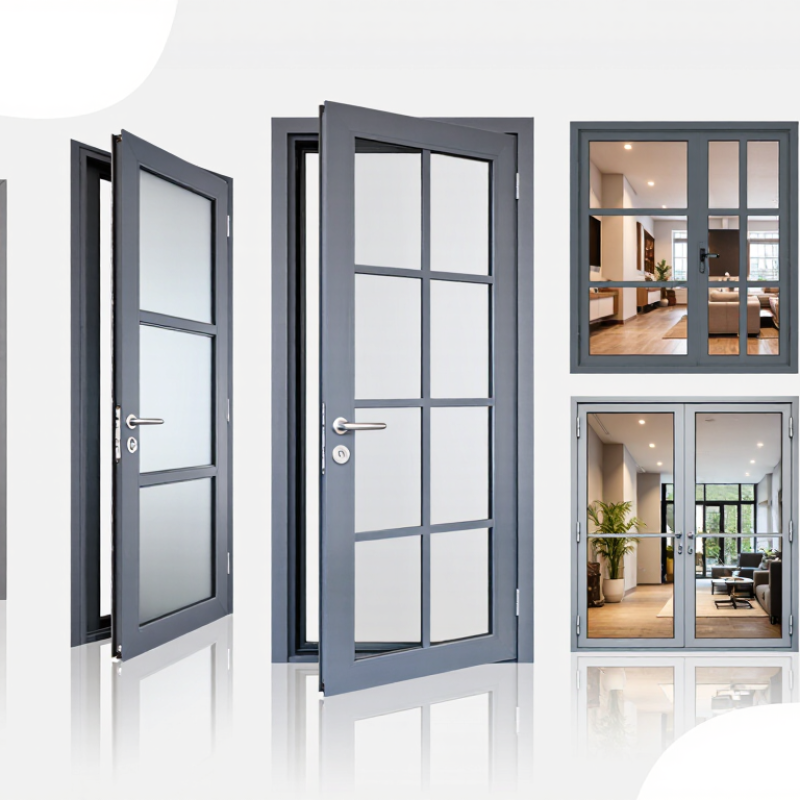
China Best All Aluminum Interior Doors for Global Buyers

China’s Best All-Aluminum Interior Doors: Materials, Design, and Performance

China Best All-Aluminum Interior Doors for Global Buyers

China’s all-aluminum interior doors combine corrosion-resistant frames, stable panels, and flexible surface finishes. Common constructions use extruded aluminum profiles with honeycomb or mineral cores. Honeycomb reduces weight, but it may provide weaker acoustic control than denser cores. That trade-off deserves attention.

The International Aluminium Institute reports that global primary aluminum production exceeded 70 million tonnes in 2023. It also notes that recycled aluminum requires about 5% of the energy used for primary production. Buyers should therefore request recycled-content data, alloy specifications, and coating records. Powder coating offers consistent color, while anodizing can preserve a metallic texture. Poor pretreatment still causes visible defects.

Design should match daily use, not only showroom appearance. Slim frames create cleaner sightlines and larger glazed areas. Concealed hinges improve appearance, yet they can complicate adjustment after installation. For bedrooms and offices, continuous seals and tested door cores matter more than decorative grooves. ISO 717-1 provides methods for evaluating airborne sound insulation, but laboratory results may not reflect gaps on site. I have seen beautiful doors perform poorly because installers ignored floor levels and wall movement. Buyers should review cycle testing, surface adhesion, hinge load, and dimensional tolerances. Requesting independent test reports is sensible. It is not excessive.

6063-T5 Aluminum Profiles: Strength, Weight, and Corrosion Resistance

China Best All Aluminum Interior Doors for Global Buyers

6063-T5 aluminum profiles offer a practical balance for interior doors. The alloy is lightweight, yet strong enough for daily opening and closing. A lighter door reduces hinge stress and makes installation easier. This matters in hotels, apartments, offices, and busy corridors. T5 tempering improves hardness after controlled heat treatment. It also supports clean machining and stable frame production. However, profile strength depends on wall thickness, section design, and connection quality. The alloy alone cannot guarantee a durable door.

Corrosion resistance is another useful advantage. The natural oxide layer helps protect aluminum in humid rooms and coastal interiors. An anodized or powder-coated surface can add further protection and color stability. Buyers should request coating specifications, surface samples, and adhesion test results. Check corners, drainage paths, and cut edges carefully. Poor sealing can still allow moisture to reach hardware. That detail is easy to miss. Real projects sometimes reveal this gap only after installation.

Tips: Confirm the profile’s 6063-T5 designation with supplier documentation. Compare frame weight, hinge capacity, and door size together. Ask for sample corner joints before approving bulk production. Inspect surface consistency under direct light. Do not judge corrosion performance from appearance alone. A simple humidity test may expose weak finishing. Specifications can look perfect on paper. Field conditions are less forgiving.

China Best All Aluminum Interior Doors for Global Buyers - 6063-T5 Aluminum Profiles: Strength, Weight, and Corrosion Resistance
Data Dimension 6063-T5 Aluminum Profile / Door Reference Unit or Rating Practical Importance for Interior Doors Technical Note
Alloy and Temper 6063-T5 Al-Mg-Si alloy Suitable for architectural extrusion and interior door frames The T5 temper indicates that the extrusion is cooled from an elevated-temperature shaping process and artificially aged.
Density Approximately 2.70 g/cm³ Provides a lighter frame than steel at comparable external dimensions Aluminum density is about one-third that of typical carbon steel, which can simplify handling and installation.
Minimum Tensile Strength Approximately 152 MPa Supports reliable resistance to pulling and impact forces in properly designed profiles Typical minimum value for 6063-T5 extruded profiles under commonly referenced ASTM B221 requirements; actual values depend on product form and specification.
Minimum Yield Strength Approximately 110 MPa Helps the frame retain its shape under normal service loads The value applies to commonly specified 6063-T5 extruded shapes and should be confirmed against the applicable purchasing standard.
Elastic Modulus Approximately 69 GPa Profile geometry is important for limiting deflection because aluminum is less stiff than steel Designers normally compensate with appropriate profile depth, wall thickness, reinforcement, and hardware selection.
Thermal Conductivity Approximately 200 W/m·K Allows heat to move readily through the frame For interior applications, thermal performance is usually less critical than it is for exterior doors; surface coatings and thermal breaks may still be specified.
Linear Expansion Approximately 23.5 µm/m·°C Allows designers to account for movement in long frames and changing indoor temperatures Clearances and installation tolerances should accommodate dimensional movement, especially in large openings.
Corrosion Resistance Good to very good in normal indoor environments Qualitative rating Suitable for bedrooms, offices, hotels, apartments, and other dry interior spaces Performance depends on moisture, salts, pollutants, surface treatment, joint design, and cleaning practices.
Common Surface Treatments Anodizing, powder coating, or liquid coating Finish selection Improves appearance, stain resistance, and surface durability Anodizing creates an electrolytically formed oxide layer; powder coating adds a polymer finish. Coating specifications should state color, thickness, and test requirements.
Typical Profile Wall Thickness Approximately 1.2–2.0 mm, indicative Balances weight, rigidity, machining, and material consumption This is a practical design range rather than a universal requirement. Final thickness must be verified by structural, hardware, and opening-size calculations.
Typical Single Door Leaf Size Up to approximately 900 × 2,100 mm, indicative Common reference size for residential and light commercial interior openings Actual limits depend on leaf construction, glass or panel weight, hinges, locking hardware, and allowable deflection.
Indicative Door Leaf Weight Approximately 15–35 kg per leaf Supports easier transport, positioning, and installation than many solid steel alternatives Weight varies significantly with dimensions, glazing, infill panels, core materials, frame design, and hardware.
Moisture Suitability Suitable with appropriate finish and detailing Indoor use Can be used in kitchens, bathrooms, and humid interiors when water exposure is controlled Avoid prolonged standing water and incompatible fasteners; provide drainage, sealed joints, and corrosion-compatible hardware where needed.
Fastener Compatibility Stainless steel or aluminum fasteners preferred Material selection Reduces the risk of galvanic corrosion at connections Direct contact between dissimilar metals in a wet or salty environment should be isolated with suitable coatings, washers, or sealants.
Recyclability Aluminum is highly recyclable End-of-life benefit Supports material recovery and long-term resource efficiency Recycling outcomes depend on collection systems and separation of aluminum from glass, seals, coatings, and other door components.
Recommended Quality Checks Alloy/temper certificate, dimensions, coating, assembly, and hardware testing Pre-shipment verification Helps ensure consistent performance for international projects Project specifications should define applicable standards, tolerances, finish requirements, corrosion testing, packaging, and installation conditions.

Door Core Options: Honeycomb Panels, Glass, and Acoustic Ratings up to 35 dB

China Best All Aluminum Interior Doors for Global Buyers

Door Core Options: Honeycomb Panels, Glass, and Acoustic Ratings up to 35 dB

All aluminum interior doors need a core matched to the room, not just the frame. Honeycomb panels provide a light, rigid structure for offices, apartments, and corridors. Their folded cells reduce weight while supporting stable door movement. This matters on larger openings. It also simplifies handling during installation. However, honeycomb cores do not automatically deliver strong sound insulation.

Glass cores create a brighter interior and help distribute natural light. Laminated or double-glazed glass can improve acoustic performance, especially in meeting rooms and private offices. Clear, frosted, and textured surfaces offer different privacy levels. Check the glass thickness, edge sealing, and safety classification before ordering. A beautiful panel can still feel unsuitable beside a busy reception area.

Acoustic performance may reach 35 dB under tested conditions. The result depends on the complete door assembly, including seals, frame joints, hinges, and installation quality. A door leaf alone cannot guarantee the advertised rating. Laboratory figures are useful, but site performance may differ. Small gaps under the frame can become noticeable sound paths. I would request test reports, construction drawings, and installation guidance from the supplier. It is also wise to compare the required privacy level with real room noise. A quiet consultation room and a standard bedroom may need different specifications. Some projects overestimate the value of a higher rating and overlook poor fitting. That mistake is common, and costly to correct.

Powder-Coated Finishes: 60–120 μm Thickness and AAMA 2604 Compliance

For global buyers, all-aluminum interior doors need more than a clean appearance. Their powder-coated finish must withstand handling, cleaning, humidity, and repeated contact. A dry film thickness of 60–120 μm provides a practical range for many architectural door applications. The exact target should follow the approved powder system and door profile.

AAMA 2604 compliance is not proven by thickness alone. It depends on pretreatment, powder quality, curing temperature, adhesion, impact resistance, color retention, and humidity performance. Reliable suppliers should provide coating specifications, batch records, and independent test reports. Thickness should be checked with a calibrated gauge at several points, including corners and narrow edges.

Measure it properly. Small defects matter.

In factory inspections, uneven coverage often appears around hinges, cutouts, and frame joints. These areas deserve extra attention before packing. A finish may look smooth under showroom lighting but reveal pinholes or thin spots outdoors. That detail is easy to miss. Buyers should confirm the substrate preparation method, curing records, acceptable color tolerance, and repair procedure before approving production. A reflective point remains important: 60–120 μm can support durability, but excessive thickness may affect edge appearance, fitting accuracy, or coating adhesion. The complete system must be evaluated.

Global Buying Guide: EN 14351-1, ASTM Standards, Customization, and QC

China Best All Aluminum Interior Doors for Global Buyers

For global buyers, aluminum interior doors require more than attractive profiles and smooth finishes. EN 14351-1 mainly covers external windows and pedestrian doorsets, so it should not be applied blindly to every interior project. Confirm the destination market, door location, and required performance before requesting compliance documents. ASTM standards may support testing for dimensions, corrosion resistance, coatings, hardware, and structural performance. The exact test depends on the project.

Customization should begin with clear drawings. Specify opening size, wall thickness, frame depth, hinge position, glass type, handle style, and surface color. Powder coating, anodizing, and wood-effect finishes can perform differently in humid or coastal environments. Sample approval is essential. Colors can vary between digital screens and physical panels.

Quality control needs measurable checkpoints. Inspect alloy thickness with calipers, check diagonal tolerances, and test door opening cycles. Examine corner joints closely. Small gaps matter. Coating adhesion, film thickness, and surface scratches should be recorded before packing. Packaging also deserves attention, especially for long profiles and glass inserts. A practical inspection report should include photographs, batch numbers, test results, and corrective actions. No checklist is perfect. Suppliers and buyers should review defects after each shipment, because repeated minor issues often reveal a deeper production problem.