Best Print Flaw Detection System for Quality Control?
In today's competitive printing industry, maintaining quality is paramount. A Print Flaw Detection System can help achieve this goal. These systems play a crucial role in identifying defects during the printing process. They ensure that the final product meets the highest standards.
Implementing such a system can lead to significant improvements. For instance, it can detect issues like ink smudges, misalignment, or color inconsistencies. However, no system is perfect. False positives or missed defects can occur, causing concern for quality managers. The right technology is essential to mitigate these risks. Without it, brands may struggle with customer satisfaction.
Investing in a Print Flaw Detection System can be transformative. It offers a blend of automation and precision. Yet, organizations must remain critical of their implementation. Continuous evaluation and updates are necessary to ensure effectiveness. The balance between efficiency and quality is delicate.
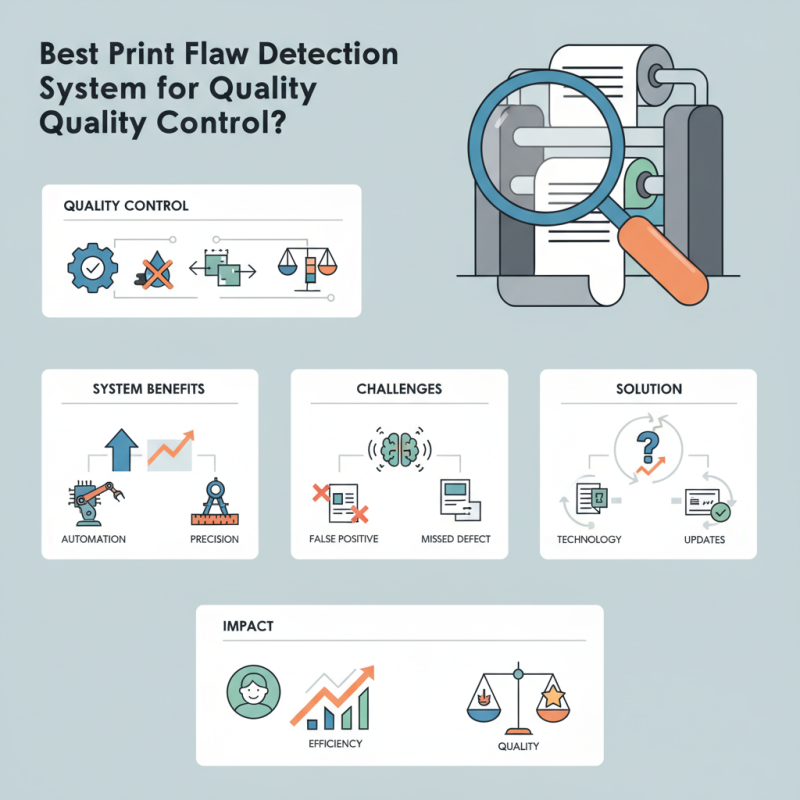
Overview of Print Flaw Detection Systems in Quality Control
Print flaw detection systems are essential in maintaining quality control. These systems help identify issues such as color mismatches, blurriness, and inconsistent ink distribution. Each flaw affects the final product's appearance, and spotting them early is crucial.
Different technologies are available. Optical inspection systems use cameras to scan prints for defects. They can detect subtle variations that the human eye might miss. However, these systems can sometimes misidentify non-issues as flaws. This can lead to unnecessary waste and increased costs.
Another method involves machine learning algorithms that learn from past data. These systems improve over time, but they require substantial initial data. The setup can be time-consuming. Companies may struggle to balance efficiency with accuracy. Regular calibration is needed, or else the system's reliability may suffer. Investing in the right detection system is vital. It is not just about technology; it is about understanding its limitations.
Key Technologies Used in Print Flaw Detection Systems
Print flaw detection systems play a crucial role in quality control. To effectively identify defects, several advanced technologies are utilized. These include high-resolution cameras, machine learning algorithms, and specialized imaging techniques. High-resolution cameras capture intricate details of printed materials, ensuring that even minor flaws are detected.
Machine learning algorithms analyze vast amounts of data. They learn from previous defects and improve detection accuracy over time. However, these systems can still make mistakes. Sometimes, they might misinterpret noise as defects. Specialized imaging techniques enhance visibility. Techniques like infrared and ultraviolet imaging can reveal flaws invisible to the human eye. Still, they may require significant adjustments to function properly in different environments.
Despite the capabilities of these technologies, challenges remain. Variability in print quality can affect detection rates. Flaws can appear based on factors like ink type and substrate. Continuous calibration is necessary for optimal performance. Inconsistent lighting conditions can also lead to missed defects. Therefore, ongoing evaluation and fine-tuning are essential to ensure that print flaw detection systems remain effective.
Criteria for Evaluating Print Flaw Detection Systems
When selecting a print flaw detection system, several criteria should be considered. Accuracy stands out as a critical factor. A system must detect imperfections effectively, lowering the risk of defective prints. Inconsistent detection may lead to customer dissatisfaction and lost business.
Another important aspect is speed. A reliable system should integrate seamlessly into the production line without causing delays. If the detection process is slow, it may hinder overall efficiency. This can impact the bottom line for manufacturers.
Moreover, consider the ease of use. Operators must be able to navigate the system with little training. Complicated systems may frustrate users and lead to errors.
Lastly, adaptability is crucial. A detection system should easily adjust to different print types and materials. The industry is constantly evolving, and a rigid system may become obsolete. Systems also need regular updates to keep pace with advancements. If a solution fails to adapt, it could undermine its value over time. Evaluating these criteria thoroughly is essential for effective quality control.
Benefits of Implementing Print Flaw Detection for Quality Assurance
Print flaw detection systems are transforming quality assurance in various industries. Reports show that companies implementing these systems can reduce defect rates by up to 40%. This leads to significant cost savings and enhanced customer satisfaction. With consumers more discerning than ever, maintaining high-quality standards is crucial.
Implementing print flaw detection helps identify issues early in the production process. This proactive approach minimizes waste and rework, which can often go unnoticed until the final stages. A study revealed that businesses can save between 20% and 30% on material costs by catching errors earlier.
However, adopting this technology is not without challenges. Companies sometimes face integration issues with existing systems. Training staff to effectively use these solutions can also be a time-consuming process. Many organizations still rely on manual checks, which are prone to human error. Transitioning to automated detection can initially seem daunting, but the long-term benefits far outweigh these concerns.
Case Studies of Effective Print Flaw Detection Implementation
Print flaw detection systems are crucial in maintaining quality control in manufacturing. A study by Smith Research indicates that 30% of printed materials contain some type of defect. This statistic highlights the need for an effective detection mechanism. Implementing advanced systems can significantly reduce the rejection rates and improve overall production efficiency.
One case study in the automotive sector shows an organization reduced its defects by 50% using automated printing inspection technology. They adopted a high-resolution camera system. This allowed for real-time monitoring of print quality. However, the transition presented challenges. Employees needed retraining, and initial costs were high.
Another example in the packaging industry revealed a common problem. Many businesses overlook the importance of consistent lighting during quality checks. A lack of proper lighting can lead to undetected flaws. Despite efforts, only 70% of flaws were identified in initial trials. This discrepancy underscores the need for constant improvement and adaptation in quality control processes. Implementing these systems can bring about significant advancements, but they must also evolve to meet changing standards and technologies.