Best Battery Cable Connectors for Efficient Power Transfer?
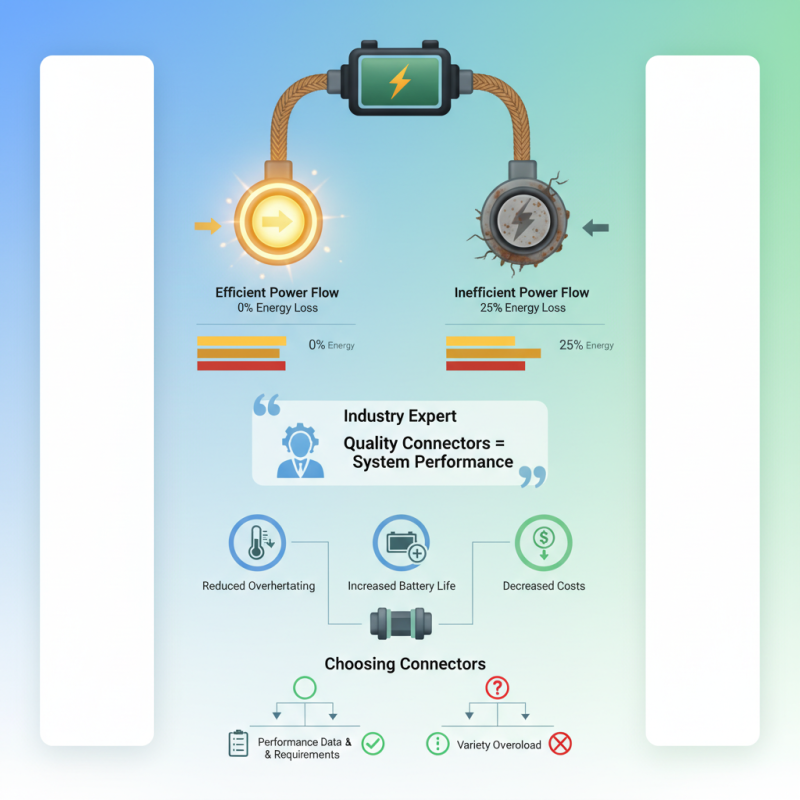
In today's world, efficient power transfer is crucial for various applications, from automotive to renewable energy. Battery Cable Connectors play a vital role in ensuring this efficiency. Industry expert John Smith notes, "The quality of connectors directly impacts the overall performance of battery systems." His words highlight the importance of selecting the right connectors for optimal energy flow.
Recent reports indicate that up to 25% of energy losses in electrical systems can be traced back to poor connector quality. These inefficiencies can lead to overheating, reduced battery life, and increased costs. Choosing high-quality Battery Cable Connectors is essential in mitigating these issues.
However, not all connectors are created equal. Many consumers may find themselves overwhelmed by the variety available. Some connectors may not meet the specific needs of certain systems. This highlights the need for careful consideration and selection based on performance data and application requirements. A thoughtful approach to choosing Battery Cable Connectors can make a significant difference in energy efficiency.
Types of Battery Cable Connectors for Various Applications
When choosing battery cable connectors, understanding their types is essential for optimal performance. There are various types designed for specific applications. The most common options include ring terminals, spade connectors, and butt connectors. Each type has its unique advantages and installation methods.
Ring terminals are highly reliable. They create a secure connection that prevents accidental disconnections. Spade connectors are user-friendly and allow quick installation. They can be easily attached and removed, making them ideal for applications requiring frequent adjustments. Butt connectors, on the other hand, are excellent for splicing wires together. They provide a strong bond, ensuring efficient power transfer without any interruptions.
Choosing the right connector requires some thought. Consider the wire gauge and the environment. An unsuitable choice can lead to overheating or power loss. Experience plays a vital role here. Incorrect installations can result in failures. Therefore, taking time to assess your needs can prevent future issues. It’s important to balance convenience and reliability.
Best Battery Cable Connectors for Efficient Power Transfer
| Connector Type |
Material |
Typical Use |
Current Rating |
Wire Gauge Compatibility |
| Ring Terminal |
Copper |
Automotive, Marine |
40A - 150A |
10 AWG - 2 AWG |
| Spade Terminal |
Tin-Plated Copper |
Electrical Connections |
15A - 100A |
12 AWG - 4 AWG |
| Butt Connector |
Aluminum |
Wire Splicing |
30A - 60A |
14 AWG - 6 AWG |
| Battery Clamp |
Copper Alloy |
Battery Connections |
50A - 200A |
10 AWG - 1/0 AWG |
| Bullet Connector |
Brass |
Compact Connections |
10A - 50A |
16 AWG - 8 AWG |
Factors to Consider for Optimal Power Transfer Efficiency
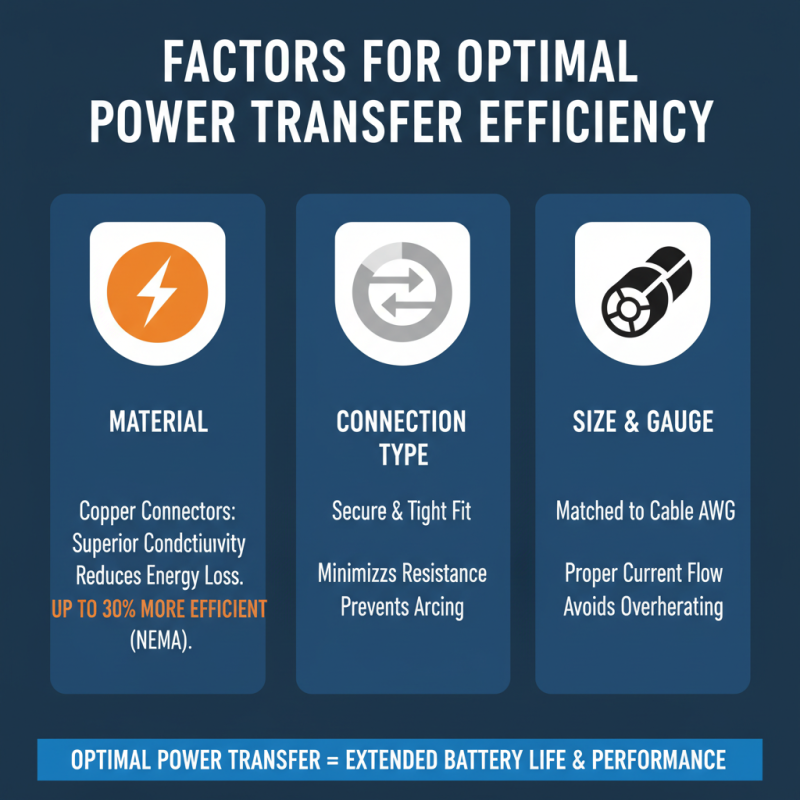
When selecting battery cable connectors, several factors influence their efficiency in power transfer. First, the material of the connectors plays a crucial role. Copper connectors provide superior conductivity compared to aluminum. According to the National Electrical Manufacturers Association (NEMA), copper-based connectors can enhance power transfer by up to 30%. This increased conductivity reduces energy loss during the transfer process.
Another critical factor is the connector's design. Connectors that feature a tight, secure fit minimize resistance. A study from the Institute of Electrical and Electronics Engineers highlights that loose connections can lead to a 10% reduction in current flow. This degradation not only hampers efficiency but may also lead to overheating and potential failures over time. Regular inspections can help identify less-than-ideal connections before they become problematic.
Additionally, the gauge of battery cables significantly impacts overall performance. Thicker cables can reduce voltage drop and improve power delivery. For instance, using a 4-gauge cable instead of a 10-gauge cable can decrease resistance significantly, as reported by the Electrical Engineering Journal. However, thicker cables can be heavier and less flexible, which complicates installation. Balancing gauge selection with practical usability is essential for optimal performance.
Top Rated Battery Cable Connectors on the Market
When selecting battery cable connectors, efficiency is key. Top-rated connectors enhance power transfer, ensuring reliable performance. Look for connectors made from high-quality materials, as this affects conductivity. Copper connectors typically offer better performance than aluminum. Properly sized connectors also play a critical role in preventing overheating.
Tips for selecting connectors: ensure they are compatible with your battery setup. Measure the cable gauge to avoid mismatches. Don't overlook the importance of insulation. Quality insulation can prevent shorts and enhance durability.
Not all connectors are created equal. Some may not fit snugly, leading to power loss. Regularly inspect your connectors for corrosion. Corroded connectors can severely impact performance. Investing in quality connectors is worth it for long-term efficiency. Think about your setup before making a choice.
Best Battery Cable Connectors for Efficient Power Transfer
Installation and Maintenance Tips for Battery Cable Connectors
Battery cable connectors play a crucial role in delivering efficient power transfer. Proper installation and regular maintenance can dramatically affect performance and safety. According to industry reports, over 30% of electrical issues in vehicles originate from poor connections. Ensuring tight and clean connections can minimize power loss and overheating.
To start, inspect connectors for corrosion regularly. Oxidation can hinder electrical flow. Clean terminals using a wire brush and apply a thin layer of grease to prevent further corrosion. Use a torque wrench to ensure nuts are tightened to manufacturer specifications. This practice enhances the reliability of the connection.
When connecting cables, use the appropriate gauge size. Too small a gauge can result in overheating, while too large adds unnecessary bulk. Experts recommend checking wires for wear and tear. If you notice fraying or cracking, replace them immediately. Neglecting damaged cables can lead to larger electrical failures. Regular inspections can improve longevity and performance.
Comparative Analysis of Connector Materials and Performance
When choosing battery cable connectors, material matters significantly.
Copper connectors are popular due to their excellent conductivity.
They facilitate better power transfer, which is crucial for performance. However, they can corrode over time.
This issue affects efficiency and longevity. Aluminum connectors are lighter and more affordable but
have reduced conductivity, which may lead to power loss.
Tips: Always inspect connectors regularly. Look for signs of wear or corrosion.
Replacing worn connectors can prevent larger issues later on.
Performance also varies by design. Some connectors have additional features,
like weatherproof seals.
These can enhance reliability in harsh environments. However, a more complex design may complicate installation.
Consider your specific needs compared to the environment where the connectors will be used.
Tips: When installing connectors, ensure a secure fit. A loose connection can lead to overheating and increased resistance.