
Top Aluminium Die Casting Auto Parts Manufacturers

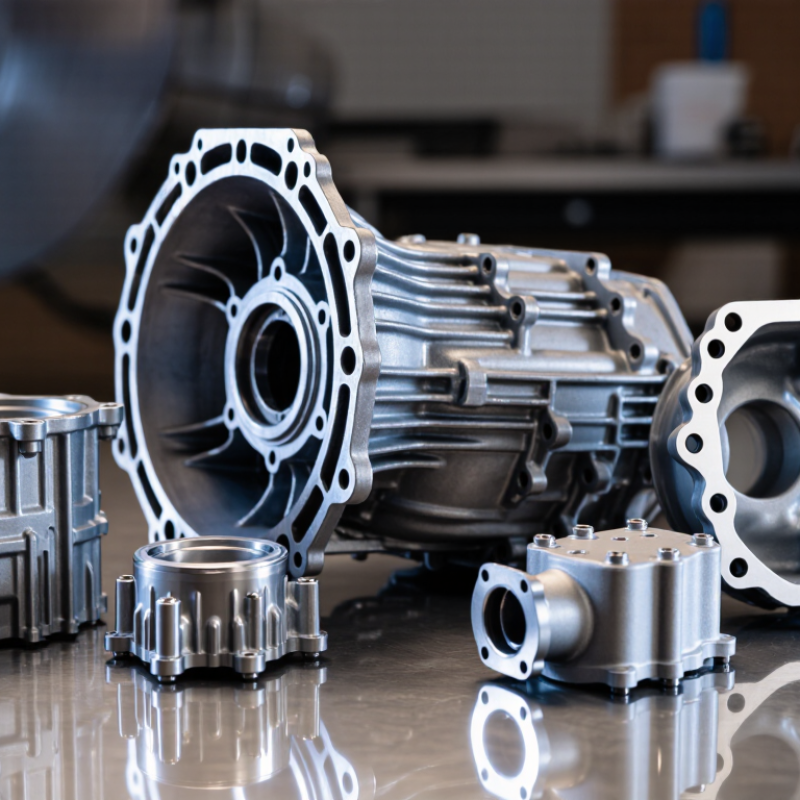
Aluminium die-cast parts help automakers reduce component weight while retaining the strength and dimensional accuracy required for demanding applications. Think gearbox housings, motor covers, and structural brackets: each must fit precisely, withstand heat, and perform consistently across production runs. That takes more than a good-looking sample. Die design, alloy selection, porosity control, machining, and inspection all affect the finished part.

The market context is changing quickly. The International Energy Agency’s Global EV Outlook 2024 reports that electric car sales approached 14 million in 2023, representing about 18% of global car sales. That shift is increasing demand for components used in electric powertrains and battery systems, though not every application benefits from the same casting process. A supplier’s technical fit matters. So does its ability to scale without losing control of quality. The International Aluminium Institute identifies transport as a major end-use sector for aluminium, reinforcing the material’s importance across vehicle manufacturing. Still, broad market figures cannot prove that an individual factory can meet a specific tolerance or delivery schedule.

This guide to Top Aluminium Die Casting Auto Parts Manufacturers examines capabilities that buyers can verify: tooling expertise, production capacity, quality systems, material traceability, and experience with automotive programs. Look for evidence, not just polished claims. A factory visit or process audit may reveal details a brochure misses. No shortlist is perfect. Supplier selection should reflect the component, the production volume, and the risks your engineering team must manage.
Top Aluminium Die Casting Auto Parts Manufacturers

Role of Aluminium Die Casting in Automotive Manufacturing

Aluminium die casting gives automotive manufacturers a practical way to produce lightweight, detailed components at scale. Molten aluminium is injected into a steel die, forming parts such as transmission housings, motor cases, and structural brackets. Thin walls and integrated mounting points can reduce assembly steps. That matters. In a vehicle, every saved kilogram can support efficiency, though the actual benefit depends on the component and design.

The process also offers repeatable dimensions, which helps parts fit alongside pumps, wiring, and fasteners on a busy assembly line. Engineers still need to consider porosity, wall thickness, and heat flow. A casting that looks sound may require inspection before it meets demanding service conditions. The trade-off is easy to underestimate. Tooling can be costly, and design changes may take time once production begins. Careful simulation, die maintenance, and checks such as X-ray inspection can reduce risks, but no process removes them entirely. Aluminium die casting is most useful when part geometry, production volume, and performance needs align—not simply because a component can be made lighter.

Top Aluminium Die Casting Auto Parts Manufacturers — Role of Aluminium Die Casting in Automotive Manufacturing

Typical material density helps explain why aluminium is widely used for lightweight automotive components such as housings, brackets and structural parts.

Typical room-temperature densities are approximate and vary by alloy. For equal volume, aluminium is about 66% less dense than steel; actual component weight savings depend on design and geometry.

How Automotive Die Casting Parts Are Designed and Produced

Top Aluminium Die Casting Auto Parts Manufacturers

Automotive die-cast components start with a job to do: support a load, guide airflow, or protect nearby systems. Designers map these requirements into a 3D model, then check wall thickness, draft angles, and likely shrinkage. A thin rib may reduce weight, but it can also fill poorly. Small choices matter.

Before cutting a steel die, engineers review metal flow and cooling. Simulation can reveal air traps or uneven solidification, though it cannot replace production trials. During casting, molten aluminium enters the closed die under pressure. The part cools, releases, and moves to trimming. Holes or sealing faces may need machining afterward. Inspection typically checks dimensions, surface condition, and internal soundness where required. Real parts can still surprise you.

Tips: Ask for drawings, alloy details, and inspection criteria early. Keep wall thickness as consistent as practical. Review sample castings under real assembly conditions; a design that looks clean on screen may need adjustment.

Key Qualities of Leading Aluminium Die Casting Manufacturers

Leading aluminium die casting manufacturers stand out through repeatable process control, not polished sales language. Ask how they manage melt temperature, die temperature, injection speed, and cooling time. These settings affect porosity, surface finish, and dimensional stability. Strong teams can explain their control limits and share inspection records for comparable parts. Details matter.

Tooling expertise is equally important. A well-designed die accounts for wall thickness, draft angles, gate placement, and expected shrinkage. Manufacturers should involve engineering staff before finalizing the design. They should then verify samples with dimensional reports and, when appropriate, X-ray or leak testing. A neat sample is useful, but production consistency matters more. No shop gets every first shot right. Look for a documented correction process, a clear root-cause review, and evidence that changes hold across later batches.

Reliable suppliers also communicate plainly about capacity, lead times, and material traceability. Ask how they track alloy lots and respond when measurements drift. If possible, visit the production floor. Observe die maintenance and how operators record checks. Small gaps can surface. A supplier may excel at casting but struggle with finishing or logistics, so define responsibilities early. Trust grows when answers are specific, records are accessible, and problems are reported before shipment.

Major Automotive Applications for Aluminium Die Cast Parts

Aluminium die cast parts appear in many automotive systems because they combine low weight with useful strength and complex shapes. Transmission cases and engine housings need accurate internal passages and sturdy mounting points. Die casting can form these features with less machining. In electric vehicles, motor and inverter housings help protect electrical components and manage heat. Battery structures and suspension brackets may also use cast aluminium, depending on design and production method. Fit matters.

Tips: Match the alloy and casting process to the part’s heat, load, and corrosion exposure. Check wall thickness, draft angles, and sealing surfaces early. A thin rib may save weight, but it can also fill poorly or distort during cooling.

For manufacturers, application requirements should guide tooling and inspection plans. A housing near a hot powertrain may need different properties from a cabin bracket. Engineers should review porosity risk, dimensional variation, and fatigue loads, not just the finished part’s weight. Even a clean-looking casting can hide a defect inside. That is easy to overlook, and real-world testing may reveal assumptions that drawings missed.

How to Evaluate and Select a Die Casting Manufacturer

Top Aluminium Die Casting Auto Parts Manufacturers

Selecting a die casting manufacturer starts with the part, not the sales pitch. Share drawings, alloy requirements, annual volume, and critical dimensions. Then ask how the supplier controls porosity, wall thickness, and dimensional variation. Request inspection records from production parts, not only a polished sample. Ask for proof.

Review the process behind each quotation. NADCA’s Product Specification Standards for Die Castings provide a useful framework for tolerances and inspection discussions. Check whether the supplier documents melt temperature, die temperature, machine settings, and in-process checks. For automotive programs, ask how tooling trials, material traceability, and corrective actions are recorded. A clean sample is not the whole story. I would also check how quickly the team explains a defect; a vague answer may matter more than a slightly slower cycle time.

Consider weight and performance targets together. The U.S. Department of Energy’s Vehicle Technologies Office reports that a 10% reduction in vehicle weight can improve fuel economy by about 6–8%. That makes reliable lightweight components valuable, but only when they meet service and safety requirements. Compare total cost, including tooling, scrap, machining, and delivery—not just price per casting. Ask for capacity data and a production-control plan. A supplier’s forecast can still be wrong, so verify it against recent output and realistic ramp-up assumptions.

Top Aluminium Die Casting Auto Parts Manufacturers - How to Evaluate and Select a Die Casting Manufacturer

Evaluation Dimension What to Verify Strong Evidence Warning Signs Suggested Weight
Automotive quality system Check whether the supplier’s quality system is appropriate for automotive production and whether its certification covers the actual manufacturing site and process. Current IATF 16949 certification, supported by ISO 9001 where applicable; documented customer-specific requirements and internal audit records. Expired or unverifiable certificates, unclear certification scope, or quality procedures that are not followed on the production floor. 15%
Part and process capability Review experience with comparable part size, wall sections, geometry, alloy, annual volume, and required production rate. Relevant production examples, a documented feasibility review, and a machine-and-tooling plan matched to the part’s projected area, shot size, and cycle requirements. Capacity claims based only on machine count, with no explanation of how the proposed equipment fits the part or forecast volume. 12%
Alloy and material control Confirm the proposed alloy meets the drawing and application requirements for strength, corrosion resistance, castability, and any heat-treatment needs. Controlled material specifications, supplier approval records, certificates of analysis where required, and traceability from incoming metal to production lots. Substitution of alloy without written approval or inability to link material records to finished-part batches. 10%
Porosity and internal integrity Determine how the supplier manages gas and shrinkage porosity, particularly in pressure-containing, structural, or subsequently machined features. Documented process controls and an agreed validation plan using suitable methods such as X-ray inspection, sectioning, or leak testing when the part specification requires them. General assurances that porosity is “not a problem” without part-specific acceptance criteria or inspection evidence. 12%
Process control and capability Review monitoring of critical casting parameters and measurement of special characteristics identified by the customer. Approved control plans, process FMEAs, calibrated gauges, recorded parameter limits, and capability studies where required by the customer; Cpk targets should be agreed for the specified characteristics. Capability figures presented without the measured characteristic, sample basis, or evidence that the process was stable. 12%
Tooling design and ownership Clarify die design responsibility, design-change approval, expected maintenance, spare inserts, and ownership or transfer terms. Written tooling specifications, documented maintenance plans, clear ownership terms, and a defined process for tool repair, storage, and transfer. Unclear ownership, undocumented tooling changes, or no agreed plan for tool-life monitoring and maintenance. 10%
Machining and finishing Check whether machining, deburring, surface treatment, and final assembly requirements can be completed under controlled conditions. Clear operation routing, controlled datum strategy, in-process inspection, and verification of machined features against drawing tolerances. Unapproved subcontracting or no defined inspection between casting and machining operations. 8%
Validation and measurement Agree how the part will be qualified before production approval, including dimensional, material, functional, and durability tests as applicable. Inspection equipment suited to the drawing, a documented measurement plan, and customer-approved validation reports such as PPAP when required. Incomplete reports, measurement methods that do not match the drawing, or testing conducted without agreed acceptance criteria. 8%
Traceability and corrective action Assess how nonconforming parts are contained, investigated, corrected, and linked to production records. Lot-level traceability, documented nonconformance control, root-cause analysis, corrective-action follow-up, and a practical product-recall response process. Mixed or unidentified lots, repeated issues without verified corrective action, or incomplete production records. 7%
Capacity, delivery, and business continuity Compare available capacity with the forecast, planned maintenance, lead-time assumptions, and contingency arrangements. A capacity plan based on equipment and shift availability, realistic lead-time commitments, and documented backup arrangements for critical operations. Promises unsupported by capacity data, dependence on a single unprotected production resource, or no escalation process for supply interruptions. 4%
Cost transparency and total cost Compare tooling, piece price, machining, inspection, packaging, logistics, and change-request assumptions on the same scope. An itemized quotation with clear volume assumptions, exclusions, payment terms, and a process for approving engineering or specification changes. A low initial price that omits required operations, inspection, packaging, or tooling maintenance costs. 2%

Selection note: Suggested weights are starting points, not industry standards. Adjust them to the part’s safety, structural, pressure, quality, and supply requirements. Confirm all acceptance criteria, capability targets, validation tests, and delivery assumptions in writing before placing a production order.