
Global buyers are entering 2026 with higher expectations for speed, flexibility, and dependable material flow. A Roller Conveyor may look simple, yet its design affects labor, product protection, noise, maintenance, and energy use. Gravity rollers suit cartons and short transfer zones. Powered rollers support controlled movement, accumulation, and heavier loads. Flexible models help temporary operations, although they may sacrifice alignment and long-term stability.
John Paxton, former president and CEO of MHI, offers a useful principle: “The best conveyor is matched to the process, not selected from a specification sheet.” That idea matters when comparing chain-driven, belt-driven, line-shaft, zero-pressure, and pallet roller systems. Each type responds differently to load weight, package shape, incline, sanitation needs, and available floor space. Small details matter. A narrow carton can bridge between rollers. A poor frame height can slow workers all day.
This guide examines the top Roller Conveyor types for international buyers in 2026. It considers throughput, roller pitch, drive design, controls, installation conditions, spare parts, and total ownership cost. It also addresses sourcing realities, including regional service capability and documentation quality. Not every popular configuration is suitable for every facility. That is easy to forget. Product trials, verified load data, and layout reviews should support the final decision. Even experienced buyers can miss a weak transfer point or underestimate cleaning time. The strongest choice is not always the most automated system. It is the system that performs reliably within the buyer’s real operating conditions.
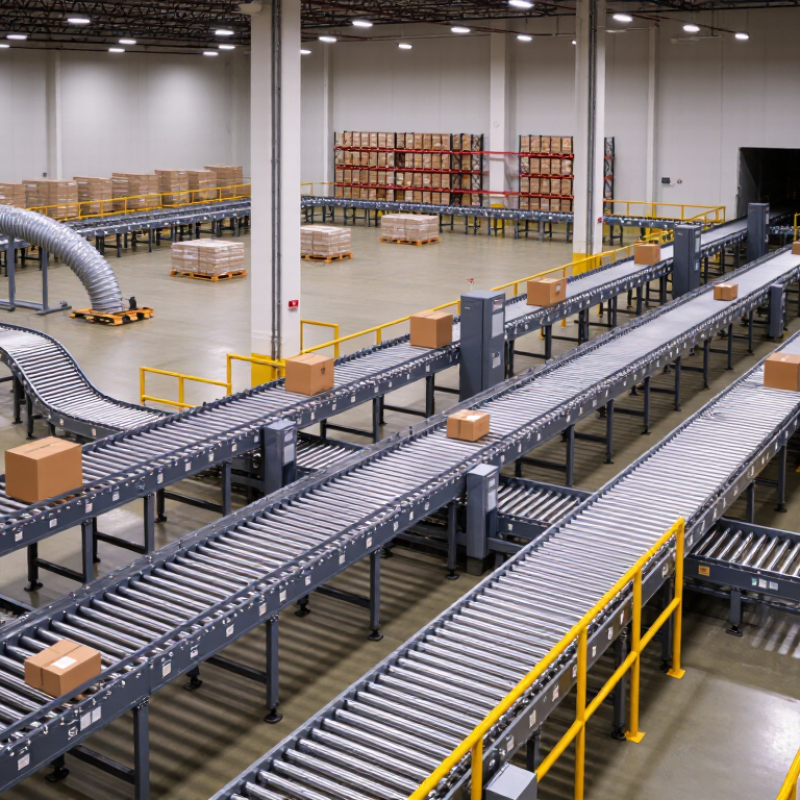
Roller conveyors use cylindrical rollers set into a rigid frame. The frame may be steel, aluminum, or another application-approved material. Rollers support cartons, totes, pallets, and carefully placed components. Spacing matters. A small box can drop between rollers when the gap is excessive. This simple mistake causes unstable travel and product damage.
Motion comes from gravity, manual pushing, or powered rollers. Gravity models need a controlled slope, adjusted during installation and testing. Powered versions use motors, chains, belts, or individually driven rollers. Each method changes noise, speed, maintenance, and energy demand. In a warehouse trial, observe the load, not only the empty conveyor. A smooth roller can still stall when cartons have soft bottoms or uneven weight.
Core functions include transporting, accumulating, transferring, sorting, and buffering materials. Guards, emergency stops, and suitable load ratings support safer operation. Engineers should verify roller diameter, frame width, line speed, and maximum load before purchase. Real package measurements are more reliable than assumptions. I have found that “standard” dimensions often need adjustment. Check twice. Dust, humidity, and frequent impacts can shorten service life, so inspection access should be planned. Buyers should also confirm installation tolerances, spare-part availability, and operator training with the supplier.
2026 Top Roller Conveyor Types for Global Buyers
Main Roller Conveyor Types and Their Best-Fit Applications
Roller conveyors suit different loads, layouts, and handling speeds. Gravity roller conveyors work well for cartons, totes, and pallets moving along a slight decline. They need little maintenance and fit warehouses with modest throughput. However, operators must control speed manually. Heavy boxes can gain unexpected momentum.
Powered roller conveyors use motors to move goods across level floors. They are suitable for distribution centers, packaging lines, and longer transfer routes. Belt-driven models handle lighter cartons smoothly. Chain-driven designs support heavier pallets and tougher working conditions. Accumulation conveyors create spacing between products, which helps protect fragile items near scanning or packing stations.
Flexible roller conveyors are useful where layouts change frequently. Teams can extend them beside trucks, temporary workstations, or loading doors. They save space, but their capacity is usually lower. Choosing the wrong frame width can cause unstable cartons and frequent adjustments. Real operating conditions matter more than catalogue capacity.
Tips: Measure the largest load first. Check weight, bottom surface, humidity, temperature, and daily volume. Ask for load testing before purchase. Leave room for cleaning and maintenance access. A practical layout should include guards, emergency stops, and clear operator paths. Local electrical requirements also need verification. Small details often decide whether a conveyor performs reliably.
| Roller Conveyor Type | Operating Principle | Typical Load Range | Typical Speed Range | Best-Fit Applications | Recommended Conveyor Length | Key Advantages | Main Limitations |
|---|---|---|---|---|---|---|---|
| Gravity Roller Conveyor | Products move by manual pushing or by gravity on a level or slightly inclined frame. | Approximately 5–1,500 kg per load, depending on roller diameter, frame, and support spacing. | Manual movement or typically 5–15 m/min by gravity. | Cartons, totes, pallets, parcel handling, warehouse staging, and loading or unloading areas. | Short to medium zones, commonly 2–20 m per section. | Low purchase cost, simple construction, low maintenance, and no drive motor required. | Requires suitable product bottoms and manual handling or a controlled slope; limited control over product spacing. |
| Powered Roller Conveyor | Motorized rollers or a drive system propel products continuously along the conveyor. | Approximately 10–2,000 kg per load, subject to drive torque and frame design. | Typically 10–30 m/min; higher speeds are possible with engineered controls. | Distribution centers, production transfer, packaging lines, pallet movement, and automated material handling. | Medium to long lines, commonly 5–100 m or more in integrated systems. | Consistent product movement, controllable speed, and suitability for automated layouts. | Higher cost and energy use than gravity systems; requires electrical, guarding, and control provisions. |
| Chain-Driven Live Roller Conveyor | A motor drives the rollers through chains, sprockets, or similar positive mechanical transmission. | Approximately 50–2,500 kg per load, depending on roller and frame capacity. | Typically 8–25 m/min. | Heavy pallets, drums, containers, industrial assembly, and rugged warehouse transfer. | Medium to long sections, commonly 5–60 m per drive zone. | High torque, positive drive, reliable pallet handling, and good performance in demanding environments. | Chain noise, exposed moving parts if not guarded, and more maintenance than belt-driven designs. |
| Belt-Driven Live Roller Conveyor | A motor-powered belt contacts the underside of multiple rollers and transfers motion to the load. | Approximately 5–1,000 kg per load. | Typically 10–30 m/min. | Cartons, cases, totes, polybags, light pallets, and applications needing smooth product flow. | Short to medium lines, commonly 3–40 m per drive zone. | Quiet operation, good traction, smooth acceleration, and effective handling of varied package sizes. | Belt wear and tensioning are maintenance considerations; not ideal for wet, oily, or very heavy-duty service without suitable materials. |
| Line-Shaft Roller Conveyor | A rotating shaft beneath the rollers uses friction spools to transmit motion to individual rollers. | Approximately 5–150 kg per load. | Typically 10–30 m/min. | Light cartons, sorting, accumulation, order picking, and packaging operations. | Short to medium lines, commonly 3–30 m. | Flexible zoning, relatively gentle product handling, and straightforward accumulation capability. | Lower load capacity than chain-driven systems and less suitable for sharp, heavy, or contaminated products. |
| Zero-Pressure Accumulation Roller Conveyor | Sensors and independently controlled zones stop or release products without sustained contact between loads. | Approximately 5–1,500 kg per load, depending on the selected drive design. | Typically 5–25 m/min. | Order fulfillment, buffering before machines, palletizing, case packing, and product-sensitive distribution flows. | Medium to long systems with multiple independently controlled zones. | Reduces product collisions, supports controlled buffering, and integrates well with sensors and warehouse controls. | Higher controls cost, greater commissioning complexity, and need for accurate sensor placement. |
| Flexible Expandable Roller Conveyor | A folding, wheeled frame expands or contracts to create a temporary gravity or powered transfer path. | Approximately 5–100 kg per load. | Manual movement or typically 5–15 m/min when powered. | Truck loading, parcel sortation, temporary packing stations, and changing warehouse layouts. | Variable length; commonly expands from 1.5 m to 6 m per unit. | Portable, space-saving, quick to deploy, and useful where fixed conveyors are impractical. | Lower capacity and stability than fixed conveyors; not intended for continuous heavy-duty operation. |
| Pallet Roller Conveyor | Heavy-duty rollers support and transfer standardized pallets, usually with powered or chain-driven sections. | Approximately 500–2,500 kg per pallet. | Typically 8–20 m/min. | Pallet storage, production lines, dispatch areas, warehouse staging, and automated storage interfaces. | Medium to long lines, commonly 5–100 m or more in system layouts. | High load capacity, durable construction, and compatibility with pallet stops, transfers, and lifts. | Requires sound, dimensionally consistent pallet bases and more floor space than carton conveyors. |
| Accumulating Pallet Roller Conveyor | Powered zones independently hold and release pallets to create controlled buffer storage. | Approximately 500–2,500 kg per pallet. | Typically 5–15 m/min. | Inbound and outbound buffering, palletizing, depalletizing, production supermarkets, and automated warehouses. | Medium to long systems, designed around the required number of pallet buffer positions. | Improves line balancing, reduces manual staging, and enables controlled pallet release. | Higher investment, controls integration requirements, and greater safety-design responsibility. |
Roller conveyor designs should follow the load, not the catalog picture. Light cartons often suit gravity rollers with smaller diameters and wider spacing. Heavy pallets need powered rollers, stronger frames, and closer roller centers. According to Grand View Research, the global conveyor system market reached about USD 10.85 billion in 2023. This growth reflects demand for faster, more adaptable material handling.
Layout changes the design too. Straight lines support simple movement and lower maintenance. Curves need tapered rollers to keep cartons aligned. Accumulation zones require controlled pressure, especially when fragile packages stop against one another. Inclines need reliable drive capacity and suitable surface grip. MHI’s 2024 Annual Industry Report found that 55% of supply chain professionals expected to increase automation investment. That does not mean every facility needs a fully automated line. Sometimes, manual zones remain more practical. I have seen layouts fail because transfer gaps were measured only on paper.
Tips: Measure the heaviest real load, not the average carton. Check pallet dimensions, load balance, speed, noise, and cleaning access. Leave space for motor replacement and emergency access. For mixed loads, adjustable guides and variable-speed zones can reduce jams. A cheap roller choice may create expensive downtime. Also, verify local safety requirements and supplier test data before ordering. There is no perfect layout; operating conditions change, and early assumptions can be wrong.
Global buyers should select roller conveyors by load, layout, labor conditions, and service access. Gravity rollers suit cartons and short transfer zones. Powered rollers handle heavier pallets and longer routes. Zero-pressure accumulation protects fragile products by spacing loads without constant contact.
The MHI 2023 Annual Industry Report reported that 74% of supply chain leaders planned to adopt robotics and automation within five years. That figure supports scalable conveyor designs, but automation is not always the right answer. A low-volume warehouse may gain more from gravity rollers than complex controls. Measure the floor first.
DHL’s 2024 Robotics in Logistics Trend Report found that 73% of respondents expected robotics to become standard in warehouses by 2030. Buyers should therefore check motor compatibility, sensor availability, and control-system integration before ordering. Global projects also need voltage options, guarding, spare bearings, and multilingual maintenance documents. Keep maintenance visible.
A practical selection error is choosing roller diameter from catalog load ratings alone. Inspect carton bases, pallet runners, dust levels, and temperature changes. Small gaps can trap soft packaging. Stainless components may help in humid areas, while painted steel can reduce cost in dry storage. I would still request a live load test; theoretical capacity sometimes hides uneven weight distribution.
Gravity, powered, accumulation, and flexible roller conveyors serve different material-handling needs. Gravity models suit cartons moving between short workstations. Powered rollers provide steadier movement for heavier loads or longer lines. Accumulation conveyors reduce product contact during temporary stops. Flexible units help warehouses handle changing layouts, though their frames require careful locking.
Safety begins with a practical risk assessment, not a copied checklist. Guards should cover pinch points, drive components, and exposed rotating shafts. Emergency stops must remain visible and reachable from operating positions. Clear warning labels help, but training still matters. Operators should understand safe loading, restart procedures, and restricted access areas. Local machinery, electrical, noise, and workplace safety requirements must guide the final design.
Installation quality affects years of service. Frames need level floors, accurate alignment, and secure anchoring. A small height error can cause cartons to drift, jam, or fall. Technicians should check roller spacing against the smallest product, not only the largest box. Keep spare bearings, belts, sensors, and fasteners available. Inspect wear points on a scheduled basis, then record findings with dates and photographs. Maintenance plans sometimes look complete but ignore dust, temperature changes, or washdown conditions. That gap deserves honest review. A conveyor may run well today and still be poorly prepared for tomorrow.