
2026 Best Tablet Counter Machine for Global Buyers?

Choosing the 2026 best Tablet Counter requires more than comparing counting speeds.

Global pharmaceutical packaging is becoming more automated and data-driven. PMMI’s 2024 Global Pharmaceutical and Medical Packaging Trends report highlights stronger demand for flexible, efficient, and traceable packaging systems. The ISPE GAMP 5 Second Edition also emphasizes risk-based validation and reliable electronic records. These priorities matter on a real production floor, where dust, vibration, and uneven tablet shapes can affect counting accuracy.

Accuracy comes first.

A modern Tablet Counter should deliver stable counting, gentle product handling, quick changeovers, and clear batch records. Vision inspection, automatic reject systems, and recipe control can reduce operator mistakes. However, more software does not always mean better control. That is an uncomfortable point. Poor calibration can still undermine an expensive machine.

Pharmaceutical manufacturing expert Tim Sandle often stresses a practical principle: “Risk must be understood before it can be controlled.” This principle fits tablet counting perfectly. Buyers should examine validation support, sensor performance, cleaning access, spare-parts availability, and after-sales service. FDA Process Validation Guidance supports this evidence-based approach, especially when equipment affects product quality.

Market reports from Grand View Research and Fortune Business Insights indicate continuing growth in pharmaceutical manufacturing and packaging automation. Yet global buyers face different tablet sizes, labor conditions, humidity levels, and regulatory expectations. A machine proven in Germany may need different testing in Brazil or Southeast Asia.

The best choice is not always the fastest model. It is the model that remains accurate, maintainable, and verifiable after months of daily use. This guide compares the leading 2026 options with that practical standard in mind.
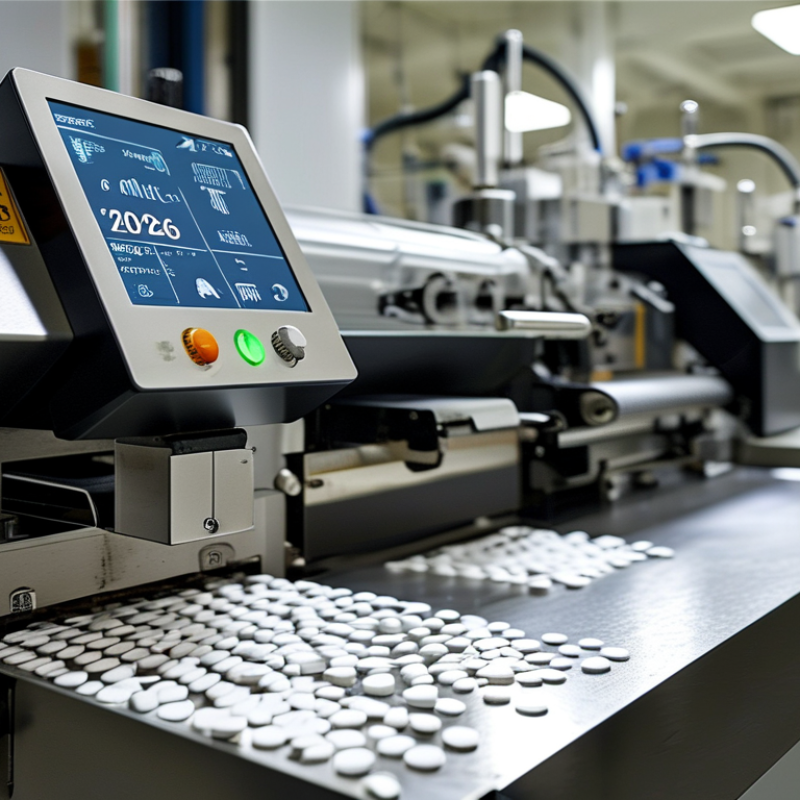
2026 Best Tablet Counter Machine for Global Buyers?

Tablet Counter Machine Basics: 30–1000 Tablets/Min Rated Speed Ranges

For global buyers in 2026, the best tablet counter machine is not always the fastest model. Rated speed usually ranges from 30 to 1,000 tablets per minute, depending on the machine design and tablet format. Small counters may suit laboratories, pharmacies, or low-volume production. High-speed units fit larger facilities with stable feeding systems and continuous operation.

A 30-tablet-per-minute machine can handle careful counting with gentle movement. At 300 tablets per minute, hopper flow and sensor response become more important. Around 1,000 tablets per minute, vibration control, dust management, and conveyor alignment require close attention. Rated speed is only a reference. Real output may fall when tablets vary in shape, thickness, coating, or surface friction. It depends.

Experienced buyers should request a trial using their actual tablets. Watch the feed path. Check whether tablets bridge inside the hopper or bounce past the counting sensor. Measure accuracy across several batches, not only one short test. A clear display, adjustable speed, tool-free cleaning, and accessible inspection areas can reduce daily errors.

Power requirements, noise, spare parts, and operator training also matter for international installation. Ask for documented test results and practical maintenance intervals. A machine that reaches 1,000 tablets per minute may still be the wrong choice if cleaning takes too long. My own assessment would remain cautious: rated speed should support the process, not define it.

2026 Best Tablet Counter Machine for Global Buyers? - Tablet Counter Machine Basics: 30–1000 Tablets/Min Rated Speed Ranges

Machine Class Rated Speed Range
(Tablets/min)
Typical Application Suitable Tablet Characteristics Typical Counting Accuracy Typical Container Formats Key Selection Considerations
Entry-Level / Small Batch 30–100 Pharmacies, laboratories, nutraceutical trials, and low-volume production Generally uniform, free-flowing tablets with limited dust and low breakage risk Up to approximately 99.9% under controlled conditions Small bottles, pouches, sample containers, and manual packaging lines Compact footprint, simple controls, easy cleaning, and low product changeover time
Compact Automatic 100–300 Small and medium pharmaceutical, supplement, and contract packaging operations Common round, oval, oblong, and coated tablets within the machine's configured size range Typically 99.9% or higher with stable feeding and validated settings Plastic or glass bottles, jars, and containers with standard neck openings Check tablet dimensions, hopper capacity, dust control, reject handling, and line integration
Mid-Range Production 300–600 Routine commercial production and multi-shift packaging Mixed tablet shapes and sizes, provided products are properly separated and fed Commonly up to approximately 99.95% after setup validation Bottles and jars used on semi-automatic or fully automatic packaging lines Evaluate multi-channel counting, anti-dust design, conveyor speed, and recipe storage
High-Speed Production 600–800 High-volume pharmaceutical and dietary supplement packaging Consistent, adequately hardened tablets with controlled dust and reliable flow properties Often specified at 99.95% or better, subject to product and process conditions High-throughput bottle lines with automatic filling, capping, and labeling equipment Prioritize synchronized conveyors, automatic bottle detection, dust extraction, and fast changeover
Industrial High-Speed 800–1,000 Large-scale, continuous production with high annual output requirements Free-flowing tablets with stable dimensions, low friability, and repeatable feeding behavior Up to approximately 99.95% or higher when validated for the product Integrated automatic bottling lines with continuous material handling Confirm actual speed at the required tablet size, count quantity, bottle format, and uptime target
Special-Handling Products 30–600 Fragile, dusty, coated, unusual-shaped, or mixed-size tablets Products requiring gentle conveying, reduced vibration, or dedicated feeding adjustments Product-dependent; verify through factory or site acceptance testing Bottles, jars, sachets, or custom containers depending on the packaging system Request product trials, assess tablet friability, and specify dust extraction and gentle handling

Note: Rated speed is a maximum or nominal machine value, not a guaranteed production output. Actual throughput depends on tablet dimensions, shape, friability, coating, dust level, count per container, hopper loading, container indexing, and the required accuracy standard. Buyers should confirm performance using representative product samples before purchase.

Counting Technologies Compared: 12–32 Channels, Accuracy, and Dust Control

In 2026, the best tablet counter machine is not defined by channel count alone. Global buyers should compare 12–32 channel systems against real production needs. A 12-channel counter may suit small batches and limited floor space. A 32-channel model can improve throughput, but it often requires stronger dust extraction and more careful calibration.

Accuracy depends on tablet shape, coating, size variation, and feeding speed. During practical equipment checks, I look for stable counts after repeated hopper refills. A machine should maintain consistent results when tablets enter the channels unevenly. Small deviations matter. Operators should test several batch sizes, not only one ideal sample. Some machines perform well during demonstrations but become less reliable after long runs. That weakness deserves attention.

Dust control is equally important. Enclosed counting paths, sealed transfer points, and accessible filters help reduce powder buildup. Clear inspection windows make daily checks faster. However, excessive suction can disturb lightweight tablets and create counting errors. The best setting is usually found through testing, not guesswork. Buyers should also examine cleaning time, sensor access, noise levels, and spare-part availability. A sophisticated 32-channel system may be unnecessary for a facility with modest output. More channels do not automatically mean better value. Reliable data from site trials remains more useful than impressive specifications.

Compliance Essentials: 21 CFR Part 11, EU GMP Annex 11, and GAMP 5

For global buyers, a tablet counter machine is a regulated data system, not only a counting device.

The FDA’s 21 CFR Part 11 requires trustworthy electronic records and signatures. Audit trails should capture every recipe change, login, correction, and rejected batch. EU GMP Annex 11 adds expectations for access control, data review, backup, and computerized-system validation.

GAMP 5, Second Edition, promotes risk-based validation rather than excessive paperwork. A practical qualification file should link user requirements to counting accuracy, sensor performance, alarm logic, and software permissions.

During factory acceptance testing, operators should challenge mixed tablet sizes, empty pockets, power interruptions, and rejected counts. Small details matter. A loose seal can weaken confidence.

The WHO Global Surveillance and Monitoring System reports that about one in ten medical products in low- and middle-income countries may be substandard or falsified. This highlights the value of traceable production records and controlled equipment.

A machine should export readable data, preserve timestamps, and prevent silent overwriting. However, compliance is not automatic after installation. Teams sometimes approve validation scripts that test ideal conditions only. That is a weakness worth admitting.

Periodic review, backup restoration tests, and user-access checks keep compliance practical. For global purchasing, documented evidence should carry more weight than impressive specifications.

Global Buyer Checklist: 21 CFR 210/211, CE Marking, and Validation Needs

2026 Best Tablet Counter Machine for Global Buyers?

The best tablet counter machine for global buyers is not chosen by speed alone. Compliance evidence matters more than a bright display. For United States supply, ask how the equipment supports current cGMP expectations under 21 CFR Parts 210 and 211. Request material certificates, calibration records, operating limits, and change-control history. Inspect product-contact surfaces closely. Smooth welds, accessible chutes, and controlled dust paths reduce cleaning risks. A fast machine can still fail a practical audit.

CE marking requires careful verification. It is not a universal quality certificate. Request the EU Declaration of Conformity, applicable directives or regulations, risk assessment, and technical documentation. Check whether electrical safety, electromagnetic compatibility, and machinery requirements apply to the complete system. The paperwork should match the delivered configuration, not an older model. Small mismatches matter.

Validation should begin with a user requirements specification. A robust package commonly includes FAT or SAT, IQ, OQ, and PQ. Challenge tests should cover different tablet sizes, speeds, count targets, jams, rejects, and restart conditions. For electronic records, review access controls, audit trails, backups, and data integrity procedures. Ask for traceable calibration standards and practical operator training records. I would also request anonymized validation examples from comparable installations. A checklist can still miss real production behavior. Humidity, vibration, and powder buildup may change results. That uncomfortable gap deserves testing before approval.

2026 Cost Evaluation: OEE, Changeover Time, Maintenance, and Total Cost of Ownership

For global buyers, the best tablet counter machine is not always the fastest model. Cost depends on OEE, changeover time, maintenance, and service access. Vorne’s OEE benchmark guidance places average manufacturing performance near 60%, while world-class performance approaches 85%. This gap can represent thousands of lost counting hours annually. Measure actual availability, speed, and reject rates during representative production runs.

Changeover time deserves close attention. A machine requiring 45 minutes between tablet formats may lose more capacity than a slower machine with tool-free parts. Record cleaning, format-part replacement, inspection, and restart time separately. In one practical evaluation, reducing changeover from 45 to 20 minutes created more annual output than a 10% speed increase. That result may not fit every facility. Small gaps matter.

Maintenance costs also shape total ownership. The 2023 Plant Engineering Maintenance Report highlights the continuing importance of preventive and predictive maintenance programs for controlling unplanned downtime. Request maintenance intervals, spare-part pricing, technician response times, and training requirements before purchase. Our first cost model was too optimistic because it ignored calibration checks and rejected batches. A stronger model includes purchase price, installation, utilities, labor, consumables, downtime, upgrades, and disposal. Use a five- to ten-year horizon. Compare cost per accepted count, not only the equipment invoice. That figure is more useful for international budgeting.

2026 Best Tablet Counter Machine for Global Buyers

Cost evaluation by OEE, changeover time, annual maintenance, and five-year total cost of ownership.

The production-focused configuration delivers the strongest balance of performance and ownership cost, with 80% OEE, a 30-minute changeover, and an estimated five-year TCO of USD 335,000. The high-throughput configuration achieves the highest OEE and lowest maintenance requirement, but its higher initial investment increases total ownership cost. Figures are transparent planning benchmarks for generic machine configurations, assuming two shifts per day, 250 operating days per year, and excluding building, installation, taxes, and product-specific tooling.